On this day in space! Nov. 28, 1967: Astronomers Jocelyn Bell and Antony Hewish disover the 1st pulsar with Little Green Men 1 signal
On November 28, 1967, astronomers found the first pulsar and they called the signal Little Green Men 1. Here's why it mattered.
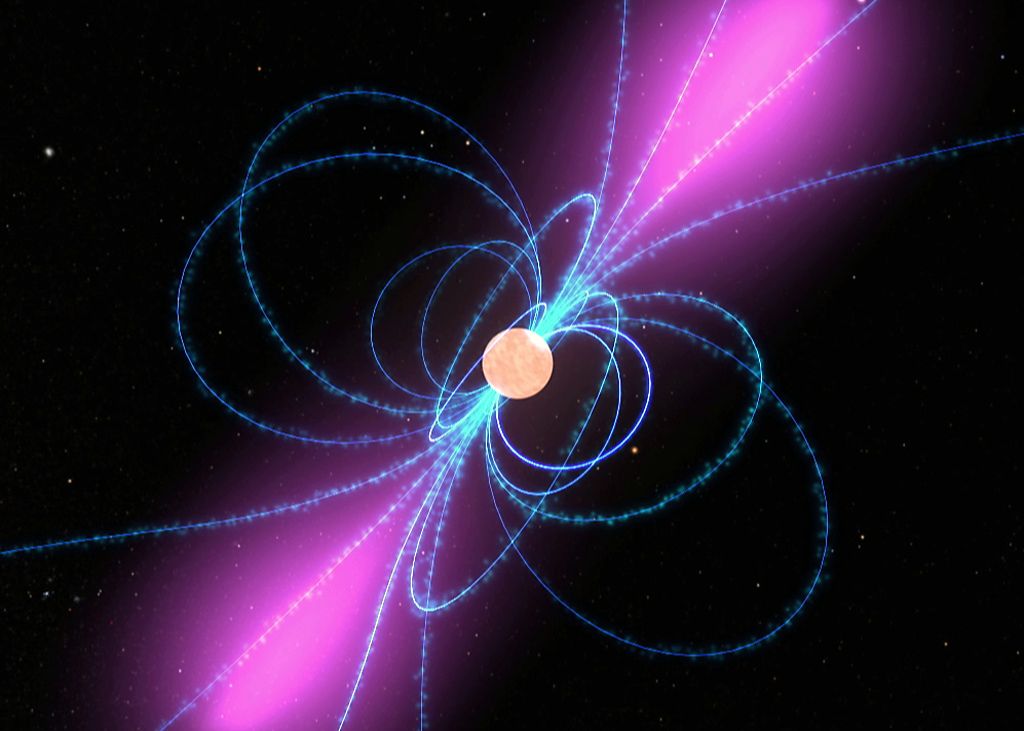
On November 28, 1967, astronomers Jocelyn Bell and Antony Hewish made history by discovering the first pulsar with the mysterious "Little Green Men 1" signal. A pulsar is a super-dense star that rotates extremely fast, emitting beams of light in opposite directions. When observed, a pulsar appears as a flickering star at a consistent, steady pace.
Bell and Hewish first noticed a star pulsating with regular intervals of 1.33 seconds while studying the constellation Vulpecula. Initially baffled by the signal, they humorously labeled it "Little Green Men 1". However, as more pulsars were discovered and the alien hypothesis was ruled out, it became clear that pulsars were natural phenomena with valuable applications in astronomy.
Pulsars serve as incredibly precise clocks, providing valuable insights into the existence and observation of neutron stars. The discovery of pulsars also led to advancements in testing Albert Einstein's theory of general relativity. Furthermore, pulsars have proven to be essential tools for navigation for spacecraft venturing beyond low Earth orbit.
Rewritten by urgent.news; may contain errors — check the original.
Source: space.com