12 grains of dust found high in Earth's atmosphere reveal secrets of water at the edge of the solar system
Grains of dust found floating in Earth's stratosphere hold the secrets of a special kind of 'heavy' water that seems to be abundant in the outer solar system.
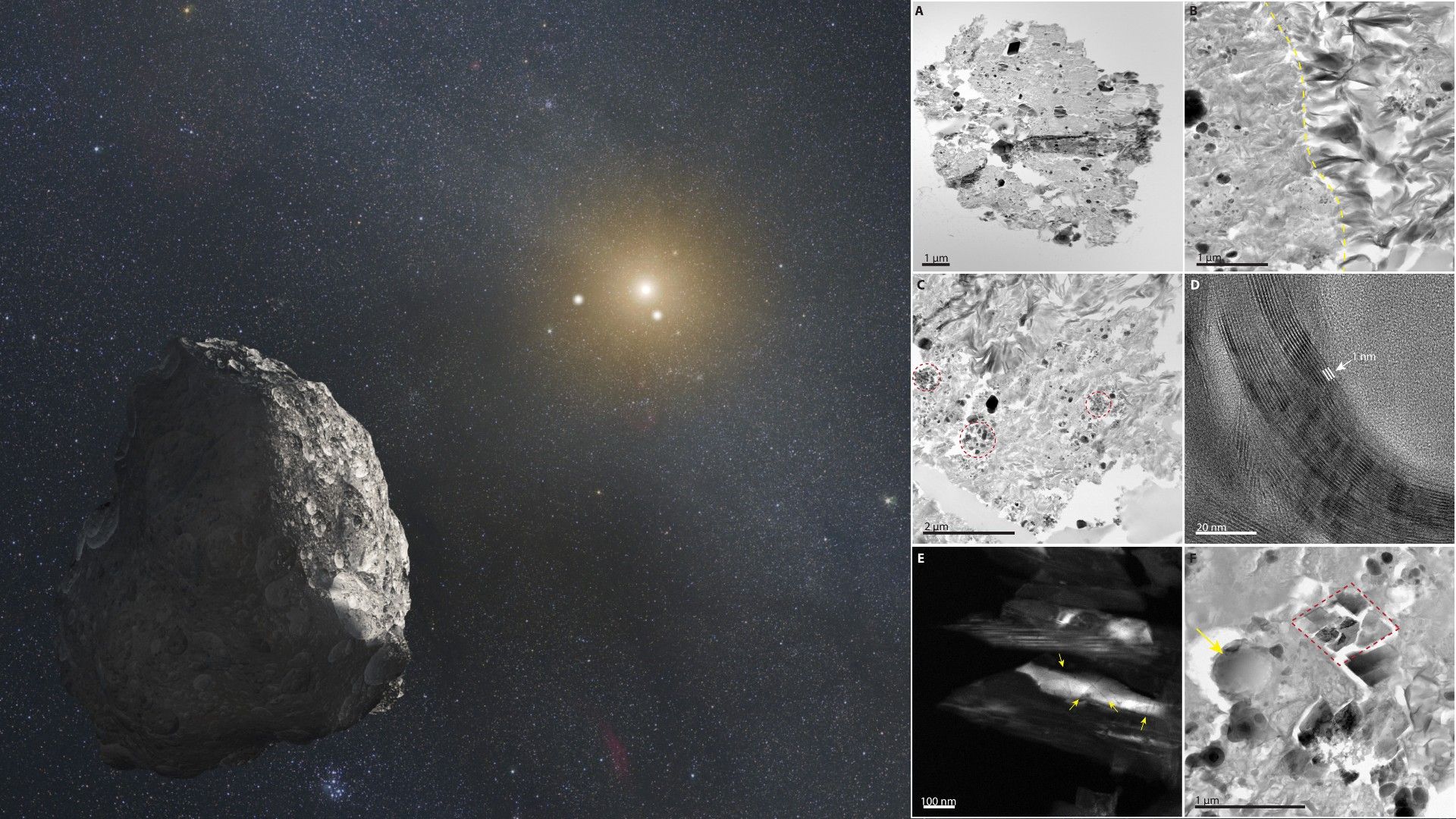
Twelve minuscule grains of dust, originating from the distant Kuiper Belt beyond Neptune, have been discovered drifting within Earth's stratosphere. These grains, captured by NASA's ER-2 research aircraft, reveal information about a specific type of "heavy" water that appears to be quite common in the outer solar system.
The study of these 12 dust grains, analyzed by a team of scientists, indicates they have interacted with water containing heavy oxygen isotopes. This finding is significant as it aids in comprehending the distribution of materials around the early solar system 4.5 billion years ago. Identification of a reservoir of heavy water in the outer solar system could help refine models describing planetary growth.
Water, chemically composed of two hydrogen atoms and one oxygen atom, usually refers to "light" water when it contains the standard isotope of hydrogen. However, "heavy" water contains a heavy isotope of hydrogen, with additional neutrons. There's also another kind of water featuring heavy isotopes of oxygen instead of hydrogen.
The existence of such heavy oxygen water reservoirs has been hinted at by mineralogical evidence from a single carbonaceous chondritic meteorite and measurements from comet 67P/Churyumov–Gerasimenko. However, it's unclear if these were isolated instances or clues to a more widespread phenomenon.
Moreover, NASA's Genesis mission, which collected particles from the solar wind in 2001, showed the sun contains more ordinary "light" oxygen than Earth and most meteorites. This suggests an outward gradient of increasing abundance of heavy oxygen. Yet, the Kuiper Belt's vast distance makes evidence gathering challenging. Instead, dust grains can carry samples of the Kuiper Belt to us.
The 12 dust grains originated in the Kuiper Belt but survived Earth's atmosphere due to their small size, mass, and velocity. The team led by NASA's Lindsay Keller used electron microscopy and ion microprobe at UCLA to study the hydrated minerals inside these grains. They spotted hydrated clay minerals formed from heavy oxygen water interacting with silicate minerals enriched with iron-nickel and sulfide in cold temperatures.
These dust grains formed 4.5 billion years ago, during the assembly of planets from a young solar system's circumstellar disk of gas and dust. The team calculated a 15% greater ratio of oxygen-18 to oxygen-16 than found in Earth's oceans, suggesting substantial heavy oxygen in the Kuiper Belt. The discovery implies an isolated reservoir of heavy water in the outer solar system, possibly blocked by Saturn or in combination with ice giants, highlighting the complexity of solar system chemistry.
Rewritten by urgent.news; may contain errors — check the original.
Source: space.com