Swift Saw the Secrets of Space Before Falling to Earth
Designed for a two-year mission, the Neil Gehrels Swift Observatory saw thousands of gamma-ray bursts and stars being torn apart by black holes over 22 years before burning up in Earth’s atmosphere.
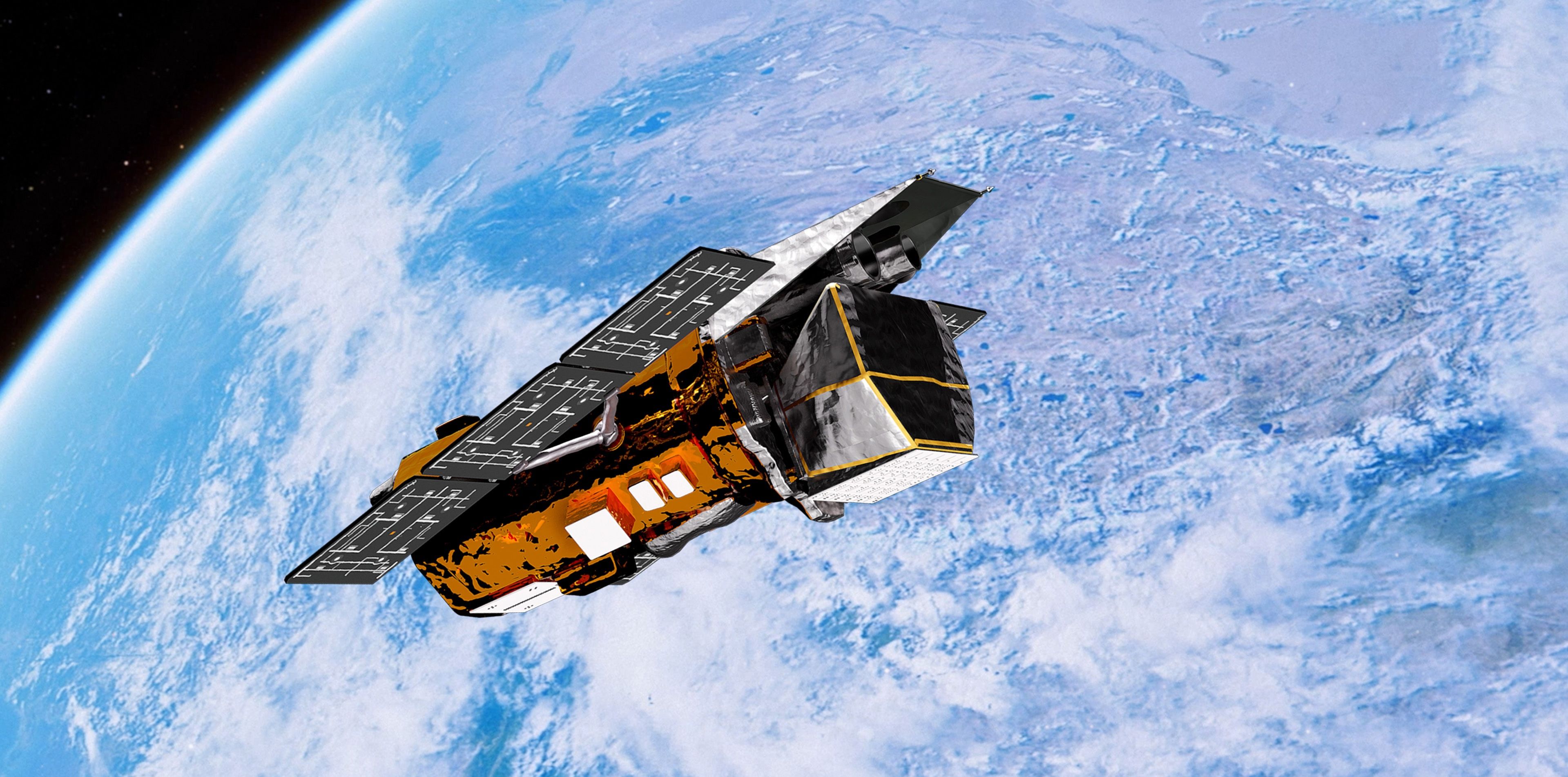
On November 20, 2004, Swift Gamma-Ray Burst Explorer was launched, equipped with telescopes to observe gamma-ray bursts, ultraviolet and visible light, and x-rays. Following the death of its first principal investigator, Neil Gehrels in 2018, the mission was renamed in his honor. Swift’s design allowed it to swiftly locate gamma-ray bursts, relay location data to other observatories, and capture images before the afterglow faded.
This rapid response was crucial for short bursts that lasted less than two seconds. In 2005, Swift detected the short gamma-ray burst GRB 050509B and successfully captured 11 x-ray photons, validating the theory that these bursts are likely caused by the merger of two neutron stars. Swift’s adaptability is highlighted by its flexible observation planning system, enabling ground commands to be issued within minutes and monitoring programs to be established for celestial objects over varying time frames.
Swift observed over 2,000 gamma-ray bursts and 1,400 supernovae, contributing to numerous scientific papers. However, due to increased solar activity, its orbit began to decay faster than anticipated. NASA decided not to send a rescue mission, but instead contracted Katalyst Space Technologies to attempt an orbital raise. LINK, a small satellite, was launched in July 2026, but a malfunction in its attitude-control system prevented it from successfully raising Swift’s orbit.
Despite this setback, LINK captured images of Tycho’s supernova remnant, completing Swift’s scientific mission on August 26, 2026.
Rewritten by urgent.news; may contain errors — check the original.
Source: wired.com