The Birds Are Listening: Scientists Used Seabirds to Track Hidden Ships
Scientists equipped birds with audio recorders, revealing a “surprising” amount of vessels had turned their location trackers off, one researcher said.
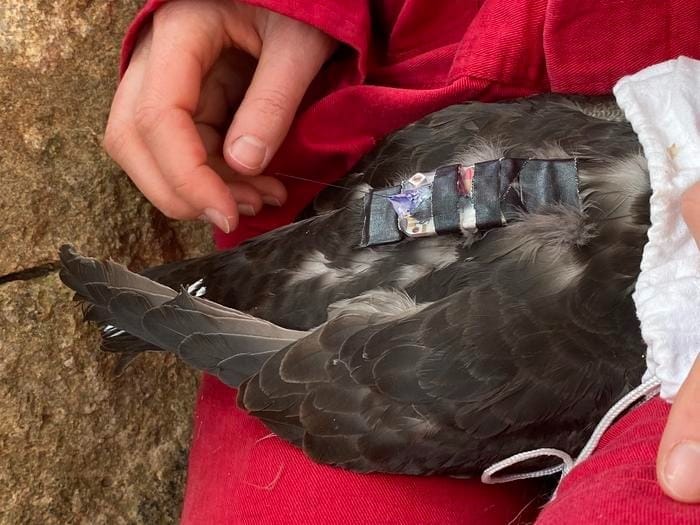
Scientists have devised a novel method to track hidden ships by outfitting seabirds with audio recorders, according to a study published in Science Advances. This innovative approach reveals the presence of many "unseen" vessels that do not activate their location trackers, such as the Automatic Identification System (AIS), which is mandatory for many ships.
The study, led by Jonathan Rutter from the University of Oxford, aimed at understanding seabird behavior and the potential risks they face as bycatch in fishing gear. However, the findings also shed light on broader efforts to monitor commercial fisheries.
The research involved three species of seabirds: the northern gannet, the Balearic shearwater, and the Westland petrel. GPS tracking guided the team as they analyzed the audio recordings, which showed that about 32% of the audio captured by seven gannets in the North Atlantic involved ships with AIS off. Similarly, 12% of the audio from four shearwaters in the Mediterranean Sea contained interactions with unseen vessels.
The petrel's long-distance interactions in the South Pacific were not precisely quantified due to a damaged geolocation device.
While the study did not delve into why specific vessels had their AIS disabled—ranging from legitimate evasions to illegal activities—it found that seabirds frequently encountered these hidden ships, often for about one-third of their daily encounters. The researchers emphasize that this does not imply half of all vessels are unseen; rather, it indicates that half of the time when seabirds interact with vessels, those vessels remain undetected.
The finding that a significant portion of the audio is from unseen vessels is particularly concerning, as it could signify either illegal disabling or operational issues like poor satellite reception.
Rutter and his team underscored that the primary goal of this research was not to aid law-enforcement or surveillance but to improve risk assessment and gain insights into seabird behavior. The study also opens new avenues for understanding seabird flight patterns and their interactions with human activities, such as the dependency of certain species on fishing vessel waste as a food source.
This method of recording seabird-vessel interactions offers a more unbiased way to assess the extent of human impact on these birds' feeding ecology.
Rewritten by urgent.news; may contain errors — check the original.
Source: 404media.co