Have Investors Lost Their Faith in the AI Boom?
"A yearslong AI boom showed signs of unraveling this week in spectacular fashion," writes NPR, adding that "investors now fear that a potential bubble in the sector could be bursting, which could spark wider financial repercussions." While the world embraced the AI boom ,"now many are having regrets," argues a Washington Post technology reporter: The AI boom's key ingredient has always been faith…
The once-prominent AI boom is facing potential collapse, with investors losing confidence in the sector, according to recent reports. This shift in sentiment comes as businesses and investors express concerns over the soaring costs associated with AI development and deployment. The core belief that the investment could lead to rapid advancements and widespread adoption has waned, with more skeptics questioning whether the financial rewards will materialize.
Initially, the AI boom was fueled by an underlying faith in the technology's potential. Investors and businesses believed that more funding could be allocated to fuel growth, and that AI would continue to evolve rapidly, bringing about widespread improvements and profitability. However, that confidence is now waning as businesses seek to cut costs by diversifying their AI technology usage and relying on more affordable options, including those offered by Chinese companies.
The magnitude of the challenge faced by AI companies is underscored by the financial setbacks they have experienced. For instance, Google's market value plummeted by half a trillion dollars in a single day, reflecting the industry's broader struggles. Such setbacks have contributed to the erosion of faith in the sector, as highlighted by Howard Marks, an investor known for accurately predicting the dot-com bust. He remarks that "it somewhat burst the bubble of infallibility."
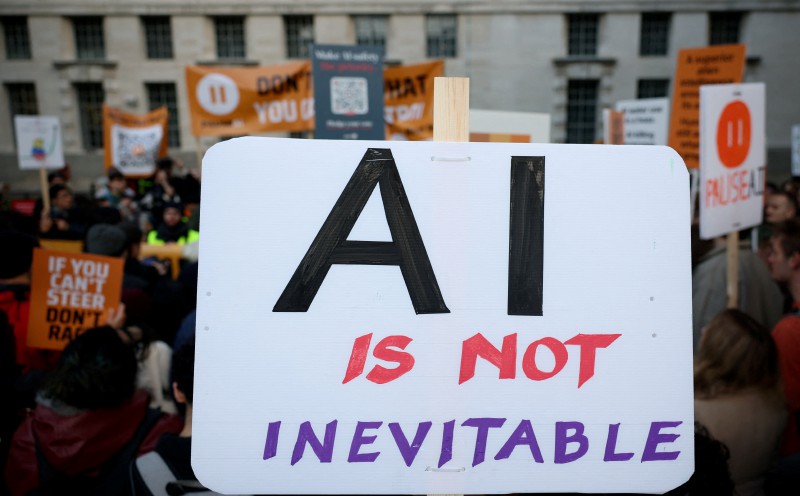
Moreover, outside of financial considerations, there are growing public concerns about the potential downsides of AI, including cyberattacks, human fatalities, and substantial job losses. These apprehensions have been reflected in recent elections, where a wave of elected officials have expressed skepticism towards the AI industry and its associated infrastructure projects.
This shift in public opinion could further impede the AI boom, as governments may impose stricter regulations or face delays in approving data center constructions.
Diane Swonk, the chief economist at KPMG, acknowledges the unease surrounding AI, citing its uneven economic impact. While the dot-com boom was associated with rising wages and a narrowing income gap, Swonk notes that the AI boom's benefits have been unevenly distributed. The sector's growth is therefore viewed with growing caution, with some even fearing that it might be entering a bubble that is now on the verge of bursting, mirroring the fate of tech stocks during the dot-com bust in 2000.
Rewritten by urgent.news; may contain errors — check the original.
Source: slashdot.org