Gente minúscula de pie, de Noni Benegas
La minificción de la escritora argentina despliega, en pocas líneas, historias y juegos de lenguaje que encuentran un eco en la poesía
In 2027, academics from the Complutense University of Madrid and Mexico will gather for a grand academic ceremony dedicated to minifictions and other brief and very brief writings. Esteemed colleague Lauro Zavala, considered the leading expert on the subject in our country, will participate alongside Laura Elisa Vizcaíno and Lucila Herrera.
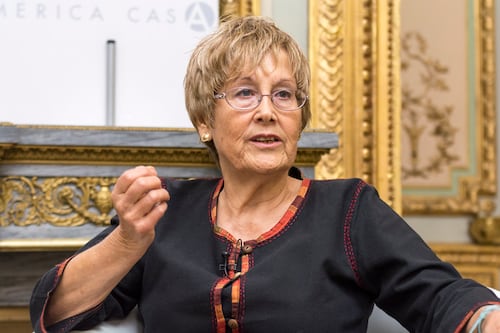
Both have theorized and conducted case studies on the matter. Laura Elisa practices minifictions as a creator. Colombia's El Fondo de Cultura Económica published Nina Benegas' "Gente minúscula de pie" in 2026, who has resided in Spain since 1977. Here are some examples, "minuscule" by nature: In a monastery near Iznatoraf, the legend persisted for centuries that Juan of the Cross would retreat into a small closet near the bell tower for long hours, a spot never discovered.
Gerald Brennan visited in 1933 and the prior recounted that years earlier, while repairing the tower, the feature was found. Writing under chains, there was no escape. Even with the courage of Sor Juana or Teresa of Ávila, who navigated censorship with wit and subterfuge, or the clupeiform fish Arenque, abundant in the Atlantic's seas, its common name was Arenque.
Celan, pronounced with emphasis, referred to a fish of the actinopterygii class, within the clupeiform order and the clupeid family, abundant in the Atlantic's waters, known colloquially as Arenque. The idol, time was running short before the game commenced, and the line moved slowly. Mutters of French whispered mais si, mais si, a phrase that continued to echo until the supermarket visit ended, where the idol's name, "messi," was finally recognized.
Dinner aimed to be a joyous night, reading between the lines of intentions and carrying the crew forward. There was a desire to make the evening pleasant, to read between the lines of thoughts and keep the vessel moving with its crew, now singing, conversing, or approving the salad and fresh cucumber. The aroma of the Sunday sea in Madrid under the fine drizzle lingered, reminiscent of the ship's prow piercing the wave.
Leadership rotated, guiding us to harbor, and the night unveiled before us. This book prompted thoughts about another celebrated Argentine author, Alejandra Pizarnik (1936–1972), whose extreme intellect and refined sensitivity could not sustain her on this planet. Included here are examples; the anthology "En esta noche, en este mundo" (Barcelona: Random House, 2017) includes them: I ask for silence...
Cervantes sings, though it's late, it's night, and you cannot. He sings as if nothing had passed. Nothing passes. The great words To Antonio Porchia, still now is not now, now is never, now and always is never. Shadow of the Days to Come To Ivonne A. Bordelois, tomorrow will clothe me in ashes at dawn, my mouth will be filled with flowers.
I will learn to sleep in the memory of a wall, in the breath of an animal dreaming. Moradas To Théodore Fraenkel, in the gripped hand of a dead person, in the memory of a madman, in the sadness of a child, in the hand seeking a glass, in the unreachable glass, in the thirst forever. Nightingale Joe, the music of the past makes...
To Olga Orozco, the one who died in her blue dress is singing. She sings imbued with death to the sun of her intoxication. Inside her song lies a blue dress, a white horse, a green tattooed heart etched with the echoes of her dead heart's beats. Exposed to all misfortunes, she sings alongside a lost girl, who is herself: her amulet of good fortune.
Despite the green fog in her lips and the cold gray in her eyes, her voice carries the distance between thirst and the hand seeking a glass. She sings.
Rewritten by urgent.news; may contain errors — check the original.
Source: eluniversal.com.mx