Every Forward-Deployed Engineer Is a Bug Report About Your Infrastructure
Why are companies hiring so many forward-deployed engineers? Explore how the FDE boom exposes hidden gaps in enterprise IT infrastructure.
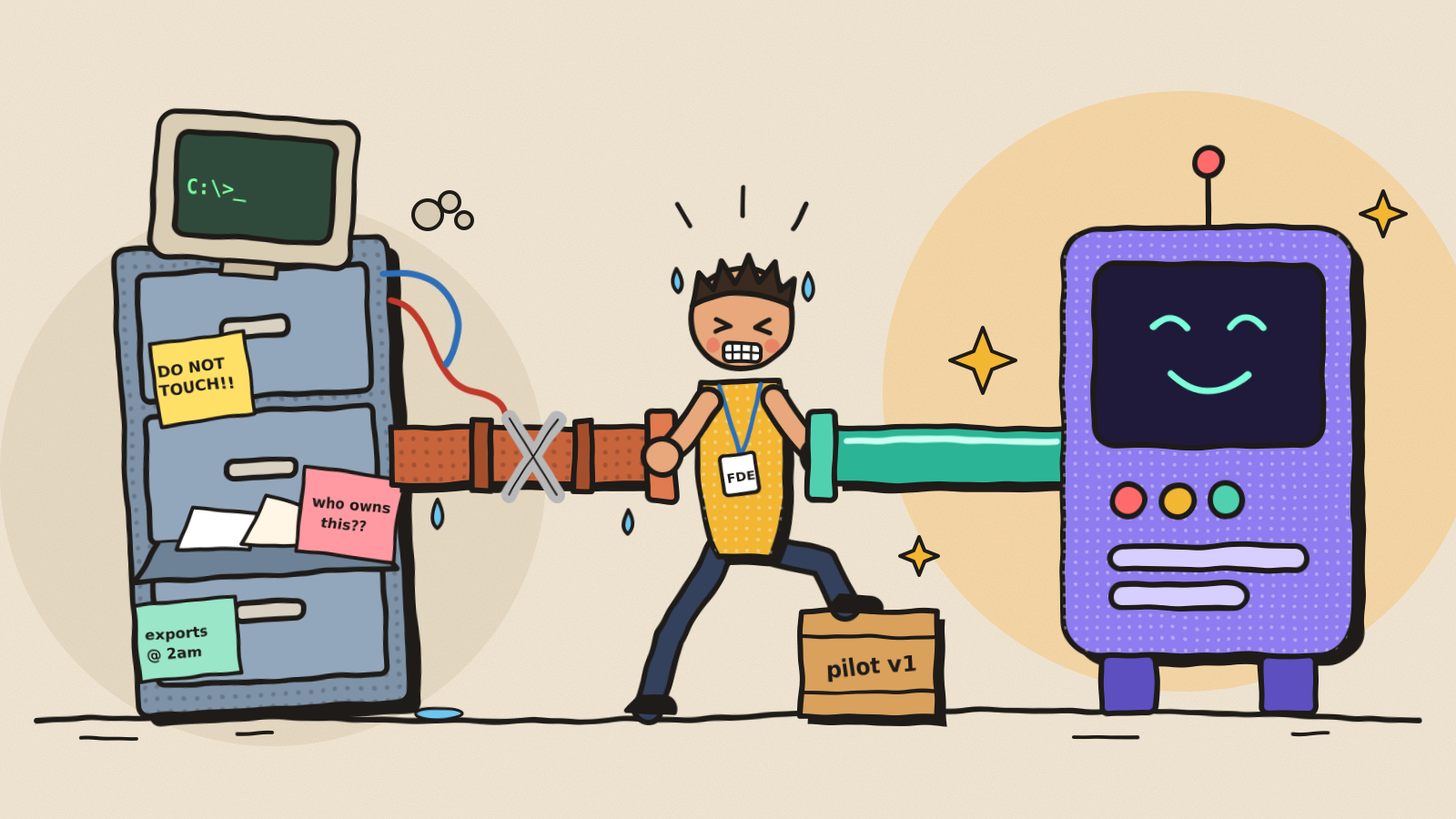
Forward-deployed engineers (FDEs) are rapidly becoming a sought-after commodity in the tech industry. According to LinkedIn, the number of these positions has surged by 42 times between 2023 and 2025. Companies are increasingly relying on FDEs to bridge the gaps in their AI systems. LinkedIn's CIEL HR describes the role as integrating AI into existing technology environments and connecting models with business workflows.
This includes plumbing and translation work, such as figuring out which systems own customer records and writing glue code to feed data into models. The role requires a unique blend of technical skills and business acumen. In the past, technical skills were considered most important for infrastructure flexibility, but today, business knowledge and interpersonal skills are also highly valued.
This shift reflects the growing reliance on human middleware to fill gaps in enterprise systems. When systems can't connect, agree on data meaning, or change without breaking, someone must fill the gap manually. FDEs are often the go-to solution for this, providing a fast and effective way to get systems working together. While this approach is often necessary in the short term, it comes with its own set of challenges.
Human middleware doesn't get reused like code, and the knowledge gained from these integrations can disappear when the FDE leaves the project. This results in a vicious cycle where the same integration work needs to be done repeatedly, often by different teams. To address this issue, companies should focus on redesigning their jobs and workflows to ensure that infrastructure gaps are addressed proactively.
This involves documenting workarounds, identifying reusable components, and investing in the development of interfaces and shared data definitions. By taking a proactive approach to infrastructure flexibility, companies can reduce their reliance on human middleware and build more resilient AI systems that can adapt to changing business needs.
Rewritten by urgent.news; may contain errors — check the original.
Source: hackernoon.com