Energy companies deploy drones that can be recharged by straddling power lines
NOMADs are drones that can land on live high-voltage lines, charge from the line itself and relocate ready for their next task.
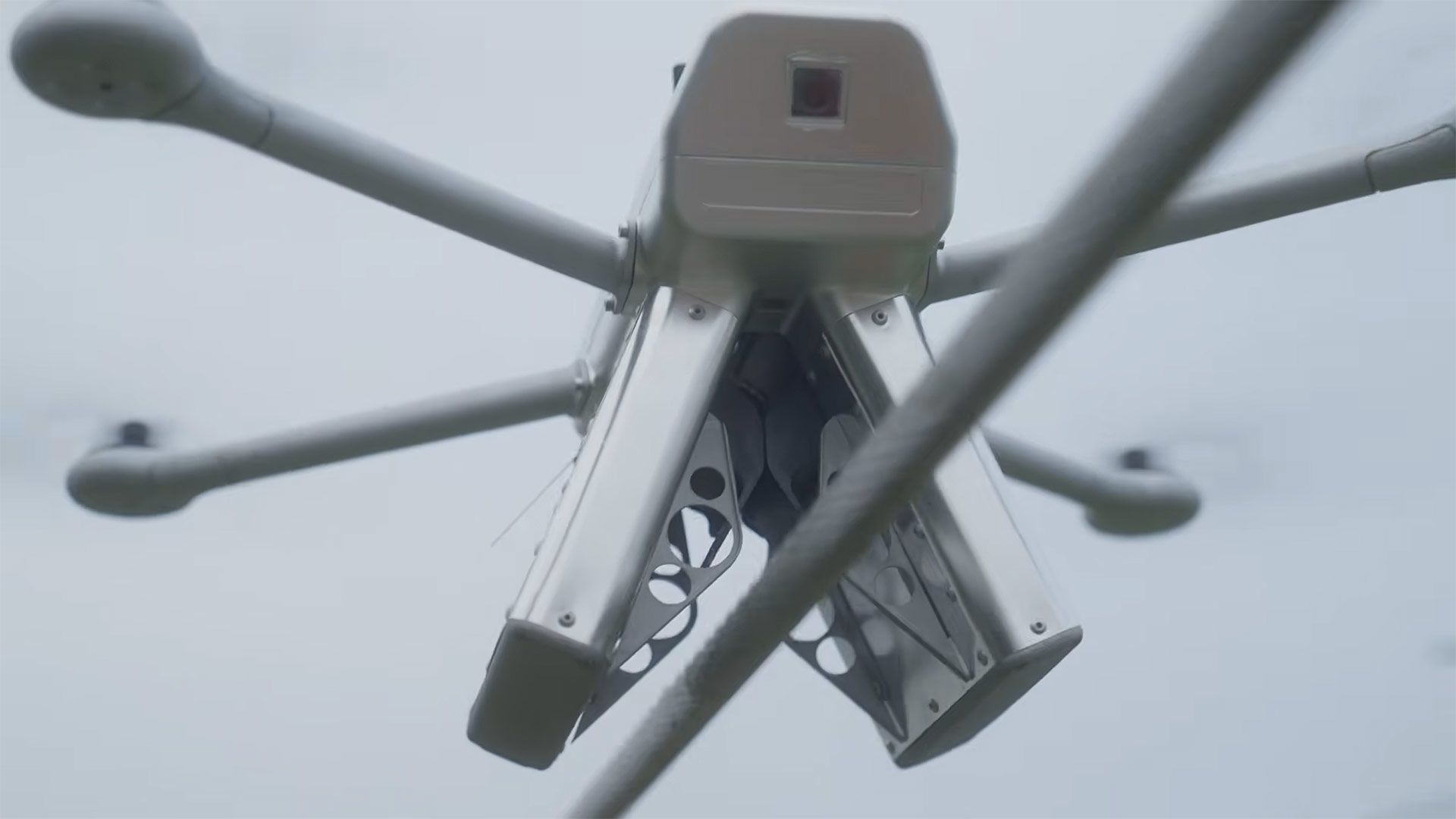
Nomadic, a tech startup, unveiled its NOMAD drones this week, revealing they are capable of flying indefinitely without needing to return to base. These quadcopters recharge by landing on high-voltage power lines, which are common features in most landscapes, and then proceed with their assigned tasks. There had been little prior information on NOMAD drones until now, but Nomadic claims they have tested the quadcopters for over 20,000 hours on live lines in Germany, Norway, and the U.S. The drones are designed to land on live high-voltage lines, charge from the line itself, and move across the grid to the locations where measurements are required.
The drones are deployed to monitor the high-voltage lines, a task that is valuable to power companies. While power companies use weather models to estimate the power each line can handle, they recognize that the conditions of the lines can vary significantly. The weakest point in any line sets the limit for the entire line, explains Nomadic.
Fixed sensors are the typical solution for line monitoring, however, mobile drones like NOMAD offer an attractive alternative. Compared to fixed sensors, NOMAD drones, which recharge inductively from the line itself, appear to be an ideal solution. Normally, an investigation of a high-voltage power line by a human operator would require extensive planning, heavy machinery, and the line would have to be temporarily taken out of service.
Nomadic asserts that a NOMAD drone can inspect approximately 25km of line, while fixed sensors are usually placed from 1km to 5km apart. Alongside the drone hardware, there is also integrated software to optimize the data gathered from the drone fleet. "Nomadic OS combines their data with weather and grid models, providing operators with a real-time view of what is physically happening on their lines," says Nomadic.
The drones are also quite robust. They have been subjected to temperatures as low as minus 25 degrees Celsius, strong winds, and lines up to 420kV. With the new funding, Nomadic aims to expand its fleet, collaborate with more partners, and hire several engineers based in Munich, Germany.
Rewritten by urgent.news; may contain errors — check the original.
Source: tomshardware.com