[國際] AI考試作弊醜聞 南韓教育部長辭職下台
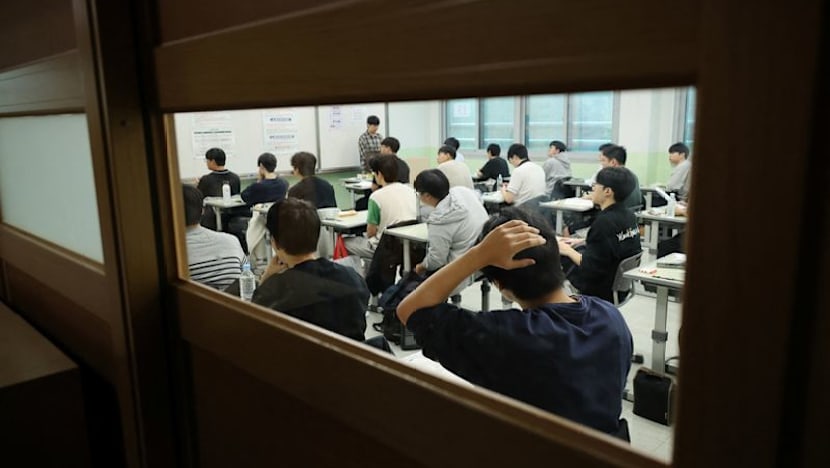
南韓教育部長崔教振(Choi Kyo-jin)今天(22日)因為AI輔助的作弊醜聞而辭職下台,這樁醜聞在南韓重要的大學入學考試前幾天爆發。 自15日以來,南韓一直壟罩在AI輔助考試作弊事件的陰影之下,當時一名國家稅務會計師考試的榜首承認使用微型鏡頭和智慧型手機,考取了接近滿分的成績,時間點正好在南韓重要的大學入學考試的4天前。 南韓一年一度、長達9個小時的大學入學考試,被廣泛認為是進入頂尖大學、獲得高薪工作與更好婚姻前景的登龍門。 這起作弊事件促使官員緊急推出一系列防範措施,包含封鎖考場周邊的WiFi,在衣服鈕扣上貼上貼紙,但教育部長崔教振仍難以安撫大眾的不安,特別是他在大學考試前三天發表的言論。 崔教振在X寫道:「考試在沒有任何重大事件的情況下結束……但身為部長,對於大眾批評我們沒有做好充分的事前準備,我責無旁貸。」 崔教振說:「現在考試結束了,我負起責任,在此提交我的辭呈。」…
The New York Times reports that China's AI ambitions are facing financial challenges, as it struggles to keep up with the United States in the development of artificial intelligence. Both countries see AI as a key area for growth, with US-based Anthropic recently securing over $800 billion in funding through its IPO. However, China's venture capital industry lags behind the US, with several major technology firms like Alibaba, Baidu, and Tencent investing in some of the leading Chinese AI companies.
Yet, many of these firms are now struggling with negative cash flow. Investor interest in AI has also waned, with China's China Creation Board 50 index falling 43% since the end of July, surpassing the decline in US tech stocks. Rhodium Group predicts that China's largest tech companies' capital expenditure will double this year to $1.39 trillion, while AI lab revenue accounts for less than 8% of that.
Research from Brookings Institution suggests China's AI labs are running on a treadmill, where speed increases but difficulty grows. A Brookings analyst, John Thornton, commented on the challenges China faces in competing with the US in AI. Additionally, US restrictions on exporting advanced semiconductors to China have forced Chinese AI labs to find expensive alternatives, such as renting data centers equipped with Nvidia chips in Southeast Asia.
However, the financial constraints may be an even bigger hurdle, as China's revenue-to-capital expenditure ratio is worse than that of the US. Epoch AI data shows that China's six largest AI companies generate about 10% of the revenue of OpenAI and Anthropic combined. China's embrace of open-source AI has exacerbated this imbalance, as it allows developers to freely use and modify models, accelerating their global spread but weakening revenue potential.
The shortage of advanced Nvidia chips, which are considered the gold standard for training powerful AI models, is another obstacle. In 2022-2026, US companies are projected to have computational power equivalent to about 20 million Nvidia H100 chips, while China will have around 26 million, many of which may have been acquired illegally.
On the second-hand market, Nvidia's DGX B300 supercomputing servers are priced at nearly $3 million, about eight times their US price. Demand for these servers has doubled since early this year, reflecting the high costs Chinese companies face to acquire cutting-edge computing power. The situation could worsen, as Nvidia CEO Huang Renxun recently resigned amid a sexual misconduct investigation, having previously championed business in China.
Nvidia has announced it will cease exporting chips to China and has established an export control committee.
Rewritten by urgent.news; may contain errors — check the original.
Sources: talk.ltn.com.tw · rti.org.tw · hani.co.kr · ec.ltn.com.tw
This story
This is one outlet's version. Read the fullest account.
- 불법사채 무효확인서 발급 빨라진다…금감원, AI 판독시스템 도입 hani.co.kr
- When it rains, it pours: NYT says China's AI ambitions running into financial difficulties rti.org.tw
- AI fundamentals protect, valuation returns to reasonable Taiwan stock market correction reveals medium to long-term buying opportunities ec.ltn.com.tw
- Free Speech: Don't Treat Frequently Tested Topics as Mandatory Ones in National Exams Using AI to Highlight Key Points talk.ltn.com.tw