Changing Arctic Waters Reshape Life from the Seafloor to the Coastlines
More than a decade of observations has revealed the many ways that the Arctic Ocean’s chemistry is changing, affecting the marine life and human communities that rely on its resources.
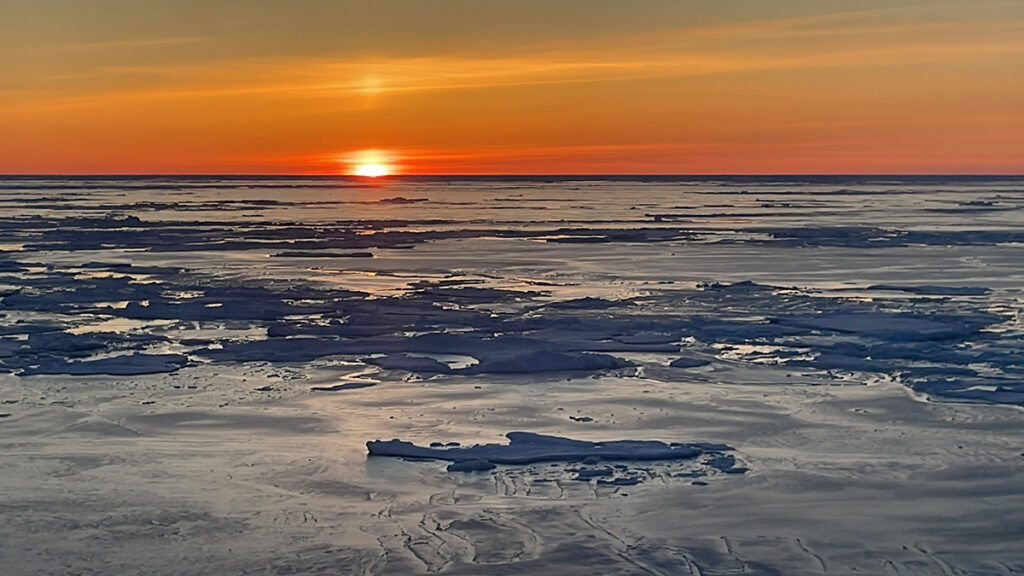
The Arctic region is undergoing significant transformations due to rising temperatures, melting sea ice, and shifting ecosystems. The Distributed Biological Observatory (DBO), an international monitoring program, has been tracking these changes since 2010, focusing on factors such as ice cover, temperature, and water chemistry. Several presentations at AGU's 2026 Annual Meeting in San Francisco will utilize DBO data to explore how these changes impact marine life from the seafloor to the coastlines.
Natalie Monacci, a chemical oceanographer at the University of Alaska Fairbanks, highlights how sea ice formation lowers seawater salinity, making it denser and more sensitive to atmospheric exchanges. This increased exposure allows the ocean to absorb more carbon dioxide (CO2), contributing to ocean acidification. As CO2 dissolves, it lowers pH levels and reduces the availability of carbonate ions, making it difficult for organisms like plankton, clams, snails, and others to build strong shells.
While photosynthetic marine algae can temporarily mitigate this issue by absorbing CO2, the eventual decomposition of organic matter returns carbon to the water, increasing CO2 levels once again.
Changes in bottom-water conditions and the timing of seasonal production have significant implications for organisms living on the seafloor and the larger animals that rely on them for food. In some areas, benthic organisms such as amphipods have been observed to shrink in size due to changing conditions. Near St. Lawrence Island in the Bering Sea, clam populations have declined, and amphipod species are becoming smaller.
This affects predators like spectacled eiders, which must consume more to meet their energy needs. However, the changes in benthic populations are not consistent across the Arctic. Southern regions near the Bering Strait have seen a decline in benthic populations, while northern regions with earlier sea ice retreat and nutrient-rich waters exhibit increased production and more organic matter reaching the seafloor.
Despite this higher production, it does not guarantee more food for predators, as gray whales have had to adapt by shifting their feeding grounds to areas with more available prey.
These ecological shifts also have profound implications for Indigenous communities that depend on marine resources for sustenance and cultural practices. Changes in sea ice, the distribution of marine animals, and seasonal conditions affect when and where these communities can hunt for culturally significant species like walruses and bowhead whales.
For instance, gray whales have had to extend their foraging efforts northward, spending more energy searching for food. These environmental changes pose challenges for traditional hunting practices and the cultural traditions tied to them, underscoring the intricate relationship between Arctic ecosystems and the communities that call this region home.
Written by urgent.news from Eos's reporting — not their text. Machine-written — may contain errors; check the original before relying on it.