What Is the Moon Base?
This article is for students. NASA is returning astronauts to the Moon – and this time they will spend more time on the lunar surface. The Moon Base is humanity’s first lunar outpost. It will be a place where astronauts live, work, and explore. ______________________________________________________________________ Words to Know outpost: a station or base located in […]
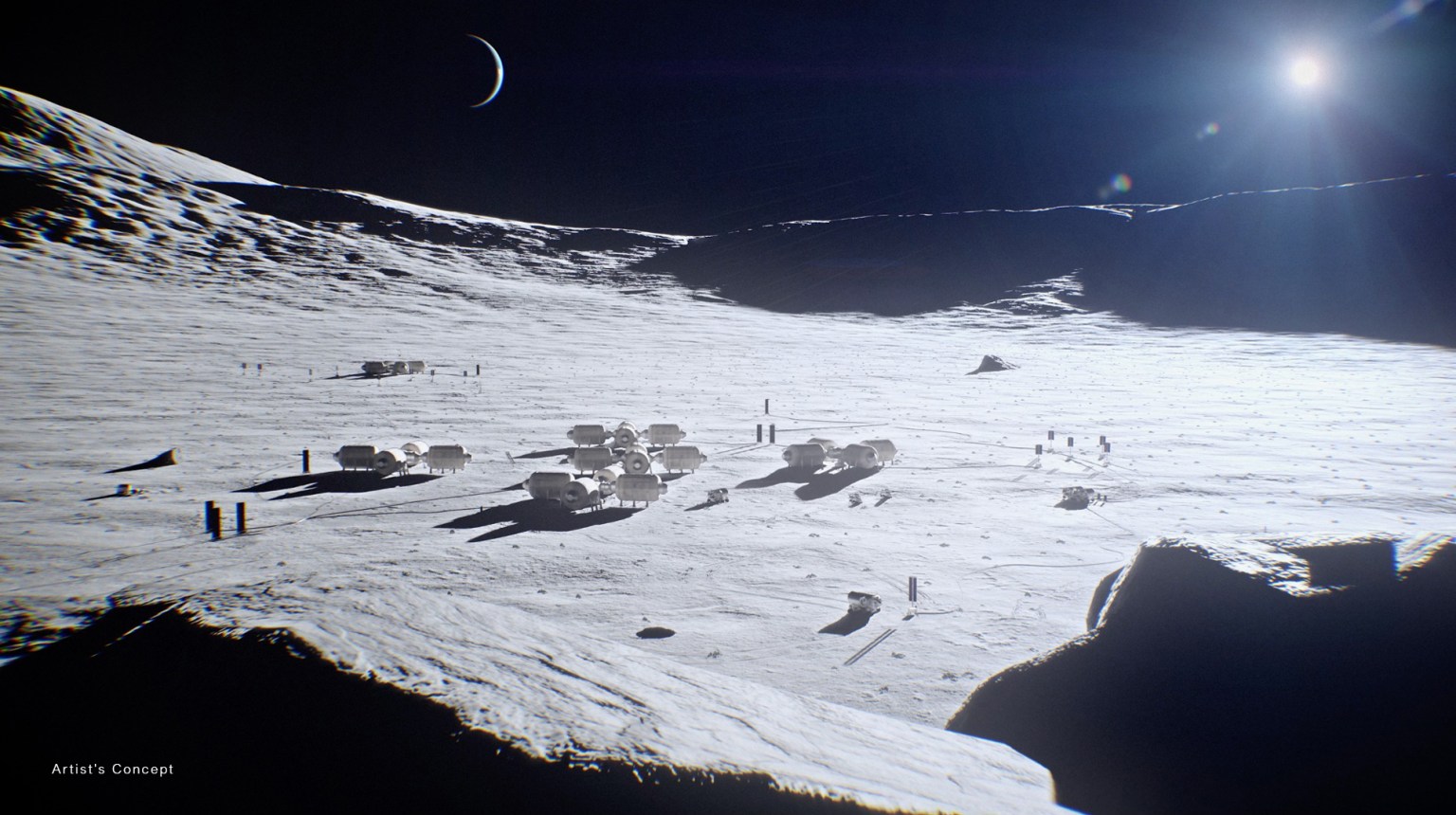
The Moon Base is humanity's first lunar outpost where astronauts will live, work and explore. It will be built in the lunar South Pole region, an area chosen for its unique lighting conditions and potential for scientific discoveries. The Sun's low horizon creates areas with extended sunlight that could be used for solar power, as well as areas in perpetual shadow that may contain deposits of frozen water ice.
The Moon Base will be constructed in three phases. Phase One is currently underway, with NASA sending robotic missions to explore the region, test new technologies and practice lunar landings. Phase Two, from 2029-2032, will focus on setting up long-term infrastructure like power systems, cargo transportation and communications hardware at various locations across the Moon Base.
Phase Three will see the assembly of a permanent lunar outpost where astronauts can reside and conduct extended missions, complete with habitats, power systems, communication equipment and transportation.
Written by urgent.news from NASA's reporting — not their text. Machine-written — may contain errors; check the original before relying on it.