KI: Export von Chips: USA verschärfen Beschränkungen kurz vor dem Treffen von Trump und Xi
Die US-Regierung schließt Lücken, die chinesische Firmen nutzen, um an Hochleistungschips zu kommen. Damit siegen die China-Kritiker innerhalb der Regierung – vorerst.
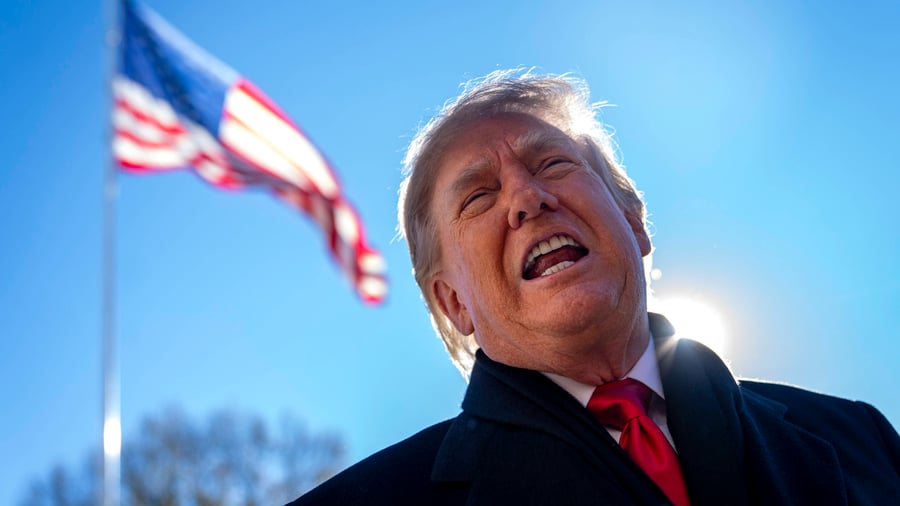
In the days leading up to the meeting between U.S. President Donald Trump and Chinese State and Party Chairman Xi Jinping, the U.S. Department of Commerce has tightened export controls on advanced semiconductor chips. This move appears to support the demand for stricter regulation from China critics within the U.S. government. The timing of the step, just before the meeting on Thursday at the APEC summit in Shenzhen, is unusual as President Trump has shown great effort in maintaining a good relationship with Xi.
On Monday morning, Trump had publicly criticized the need for stricter rules for the export of chips from the tech giant Nvidia, stating, "We are on our way to China and I do not believe China should be insulted before we even arrive." Experts have deemed the new rules as highly significant, stating that it affects capital flows worth hundreds of billions.
The 132-page regulation is divided into three categories: preventing the smuggling of American high-performance chips, specifically from Singapore, Malaysia, Thailand, Indonesia, and Brazil. Countries that were the largest importers of American chips must now apply for permission from U.S. authorities before importing. The aim is to prevent large-scale purchases of U.S. chips by companies and their subsequent sale to Chinese enterprises.
Stricter restrictions on companies providing computational power to Chinese companies for a fee. Bridging loopholes allowing Chinese companies to utilize chip production services from companies like TSMC. Two factions within the U.S. government The new regulation is based on an internal dispute within the government that has been ongoing for months.
The question at hand is whether stricter export controls on American technology should be pursued in the race for technological leadership. Those advocating for laxer rules argue that it would make China dependent on American supplies, thus preventing China from developing its own high-performance chips. They also fear that a harder stance on export controls could result in China retaliating.
"Read more: Solidarity wave in tech circles - How Silicon Valley lobbies for Jensen Huang's return The Chinese government has already demonstrated the tools it has to offer by denying American companies access to crucial raw materials. U.S. Trade Representative Howard Lutnick is said to be part of this faction, as is former Nvidia CEO Jensen Huang, who resigned on Thursday.
Those advocating for stricter rules believe that it is the best way to prevent China from making further advancements in high-tech and thus integrating into the U.S. While conflicts within the U.S. government were frequent during Trump's first term, they have been significantly less frequent during his second term. It was particularly unusual for Trump to acknowledge the existence of a disagreement on Monday.
"There are two different points of view: one is that we don't want to anger China. ... The other is that we fight with hard restrictions and do what needs to be done. You can't say that one or the other is right or wrong." Lutnick is increasingly under pressure The Nvidia co-founder's affair with Alice Huang, a Chinese businesswoman suspected of espionage for China according to a secret report, led to US Trade Representative Lutnick blocking stricter export rules for American chips multiple times.
Alice Huang ran a Singaporean company, Megaspeed, which allegedly provided Chinese enterprises with easy access to Nvidia's high-performance chips and may have broken the law. Reuters and other media reported that a heated dispute occurred between US Treasury Secretary Scott Bessent and Lutnick in the White House. Bessent demanded an explanation as to why the U.S. had not banned the sale of advanced AI chips to Megaspeed, which allegedly profited from Chinese espionage.
The U.S. Trade Department denies this claim. Bessent recently publicly stated again that his ministry and other parts of the Trump administration have long advocated for restrictions against Megaspeed. However, the Trade Department is responsible for implementing these measures and inquiries should be directed there. Particularly controversial is Lutnick's stance on stricter regulations for technology exports to China, which has raised concerns due to potential conflicts of interest stemming from his or his family's investments in laxer regulated companies.
Megaspeed was not the only case where Lutnick had opposed stricter rules for technology exports to China, as there has been no activity on the "entity list" for over a year, an unusual pause. Americans are prohibited from exporting products to companies on this list unless they have explicit permission from the U.S. government. The unusual wording in the Commerce Department's announcement suggests that Lutnick had also resisted the new export regulations.
The order was supposedly "issued by the Treasury Department and the National Security Council," the Commerce Department stated.
Written by urgent.news from Handelsblatt's reporting — not their text. Machine-written — may contain errors; check the original before relying on it.
This story
This is one outlet's version. Read the fullest account.
- Rivalry with China: New US restrictions on export of AI chips handelsblatt.com