Pakistan gets Turkey’s GI tag for basmati rice: Why India’s Madhya Pradesh could benefit from Ankara’s revised map
Pakistan has secured a basmati GI tag in Turkey, a close diplomatic ally that backs Islamabad on Kashmir. However, its revised map, covering specified districts across four provinces but excluding PoK, could strengthen Madhya Pradesh’s case for inclusion in India’s basmati GI framework.
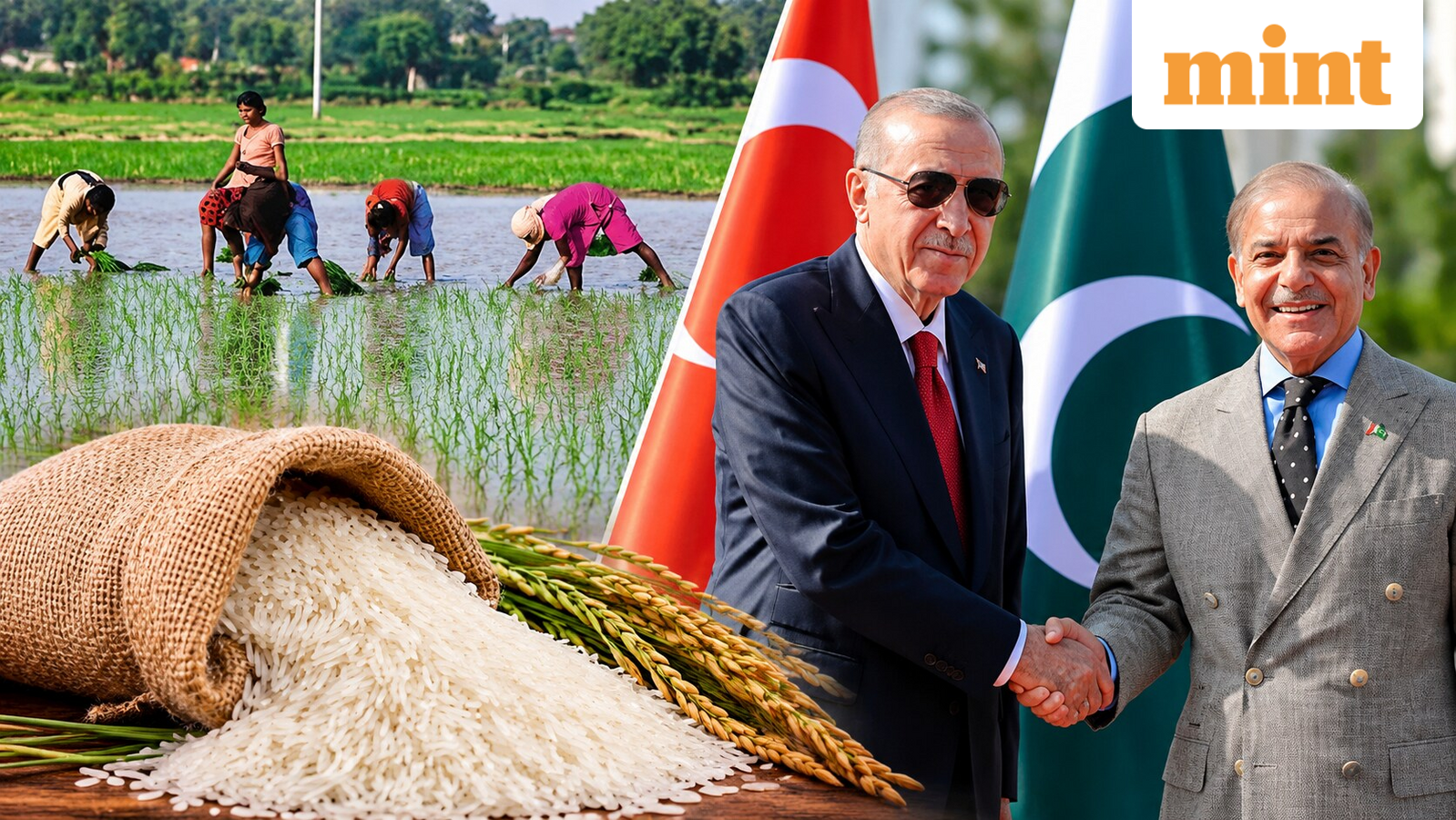
Pakistan has secured geographical indication (GI) recognition for its basmati rice in Turkey, a boon for the country but potentially beneficial to India's Madhya Pradesh as well. The Turkish Patent and Trademark Office registered Pakistan's basmati rice under the Mahreç İşareti category on January 2, 2026, following a submission by Pakistan's Trade Development Authority on February 6, 2024.
This development comes at a time when Turkey and Pakistan share close political and diplomatic relations, often supporting each other's positions on various issues.
The key aspect of the Turkish registration is the geographical description of Pakistan's basmati claim, which has been revised to exclude Pakistan-occupied Jammu and Kashmir (PoJK) and include specific districts in Punjab, Sindh, Khyber Pakhtunkhwa, and Balochistan. This geographical change is particularly significant for India's bid to recognize basmati rice grown in Madhya Pradesh, which has been seeking inclusion for years.
The Assistant Registrar of India's GI framework rejected Madhya Pradesh's application in March 2018, arguing that the state lies outside the traditional Indo-Gangetic Plains belt associated with basmati cultivation.
However, Pakistan's Turkish registration demonstrates that basmati can grow in geographically diverse areas, beyond the traditional Indo-Gangetic Plains. This could provide an important comparative argument for India's GI recognition process. Factors such as soil, water availability, climate, humidity, and sunshine, which are relevant in Pakistan's registered specification, could also be considered when evaluating basmati grown in Madhya Pradesh.
While a foreign GI registration does not automatically alter India's basmati GI boundaries or guarantee recognition for Madhya Pradesh, it offers an additional point of comparison in the state's ongoing fight for recognition.
India must build its case for basmati GI recognition in Madhya Pradesh on robust scientific, geographical, and agricultural evidence, while ensuring the identity and international reputation of Indian basmati are protected.
Rewritten by urgent.news; may contain errors — check the original.
Source: livemint.com