SpaceX’s Starship returns from orbit and is captured by launch pad arms in a dramatic first
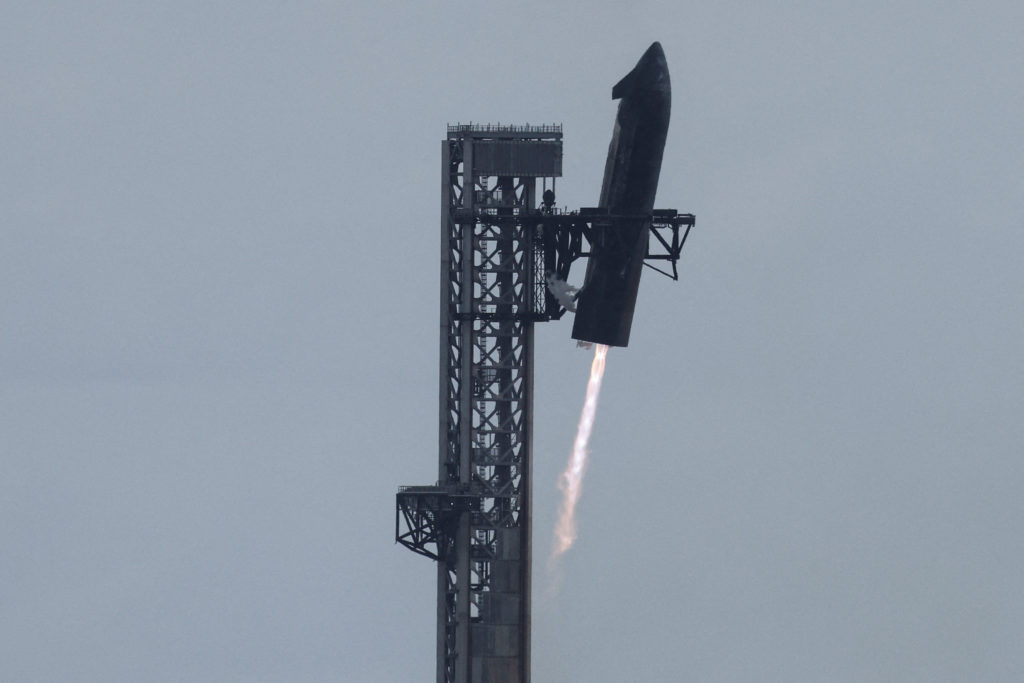
CAPE CANAVERAL, Fla. (AP) — SpaceX's Starship soared back to Earth on Saturday, being caught mid-air by massive mechanical arms at the very launch pad where it had begun its journey 22 hours prior. This marked the first-ever capture of a Starship returning from space, a grand finale that Elon Musk and his team had envisioned. Despite the first-stage booster exploding shortly after Friday's launch from Texas, the overall mission was deemed a success.
The stainless steel, bullet-shaped spacecraft gracefully lowered itself upright at the launch pad, showcasing the full reusability of Starship, designed for lunar and Martian travel. Although the booster recovery was unsuccessful on Friday, SpaceX had previously achieved three successful booster captures, validating the technique.
NASA, which is paying for Starship to land Artemis astronauts on the moon and help build a permanent lunar base, welcomed the news. Musk's grand vision includes launching fleets of Starships to build a city on Mars. The 407-foot (124-meter) behemoth rocket launched late Friday from SpaceX's base near the U.S.-Mexican border, separating from its booster before issues arose.
The upper-stage spacecraft circled the globe 165 miles (265 kilometers) above the Earth, transmitting live views of itself and Earth via Starlink. SpaceX reported that the spacecraft's vital heat shield and other components functioned well. The booster, however, had its engines shut down prematurely on the way back down, triggering a self-destruct sequence upon sensing an improper position.
Engineers are currently investigating the cause. SpaceX aims to commence launching Starships from Florida's Kennedy Space Center within the next few months, setting the stage for NASA's next Artemis mission, which will remain in Earth orbit for lunar lander practice. Artemis III's four astronauts will attempt to dock their capsule with Starship and Blue Origin's Blue Moon, with NASA targeting Artemis IV for a potential moon landing in 2028.
Written by urgent.news from Winnipeg Free Press's reporting — not their text. Machine-written — may contain errors; check the original before relying on it.