NASA’s Voyager 1 Nears Historic One-Light-Day Distance From Earth
NASA’s Voyager 1 is approaching a milestone no human-made object has reached before: a distance so great that a radio signal takes 24 hours to travel between the spacecraft and Earth. According to NASA’s Jet Propulsion Laboratory (JPL), the probe is expected to reach one light-day from Earth on Nov. 18, at about 5:16 a.m. […]
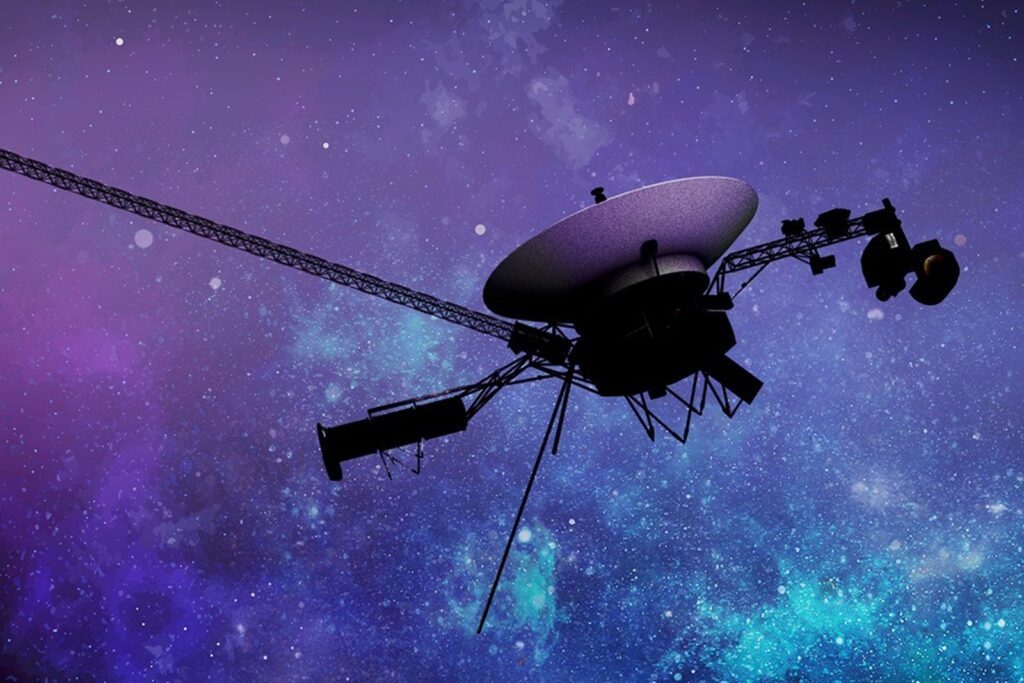
NASA's Voyager 1 is nearing a historic milestone as it approaches a distance of one light-day from Earth, which is the farthest any human-made object has traveled. This achievement comes after the probe has been traveling through space for over 49 years since its launch in 1977. Voyager 1 entered interstellar space in August 2012 and still transmits scientific and engineering data back to Earth.
Crossing the one light-day distance is a significant marker of the probe's journey, but it won't affect the spacecraft or its surroundings physically. The communication challenge is substantial, as it takes about 24 hours for a radio signal to travel between the spacecraft and Earth. Thus, any message sent to Voyager 1 would not receive a response for two days.
Voyager 1's continued operation is dependent on its dwindling power supply, which is generated by radioisotope thermoelectric generators using decaying plutonium. The spacecraft loses about four watts of power each year, requiring engineers to switch off equipment and scientific instruments to prolong the mission. In early September 2026, NASA conducted an energy-saving operation called the Big Bang, which reduced the spacecraft's electricity consumption while preserving necessary heat for protecting its systems.
Although Voyager 1's power will eventually run out, it is still expected to remain operational for tens of thousands of years. After that, the probe will continue its silent journey through the cosmos, eventually passing within approximately 1.7 light-years of the star Gliese 445 in about 40,000 years.
Written by urgent.news from Colombia One's reporting — not their text. Machine-written — may contain errors; check the original before relying on it.