The Grand Canyon is missing over a billion years of rocks. Now scientists know why.
The mission 1.2 billion years of geological history at the Grand Canyon finally has an explanation.
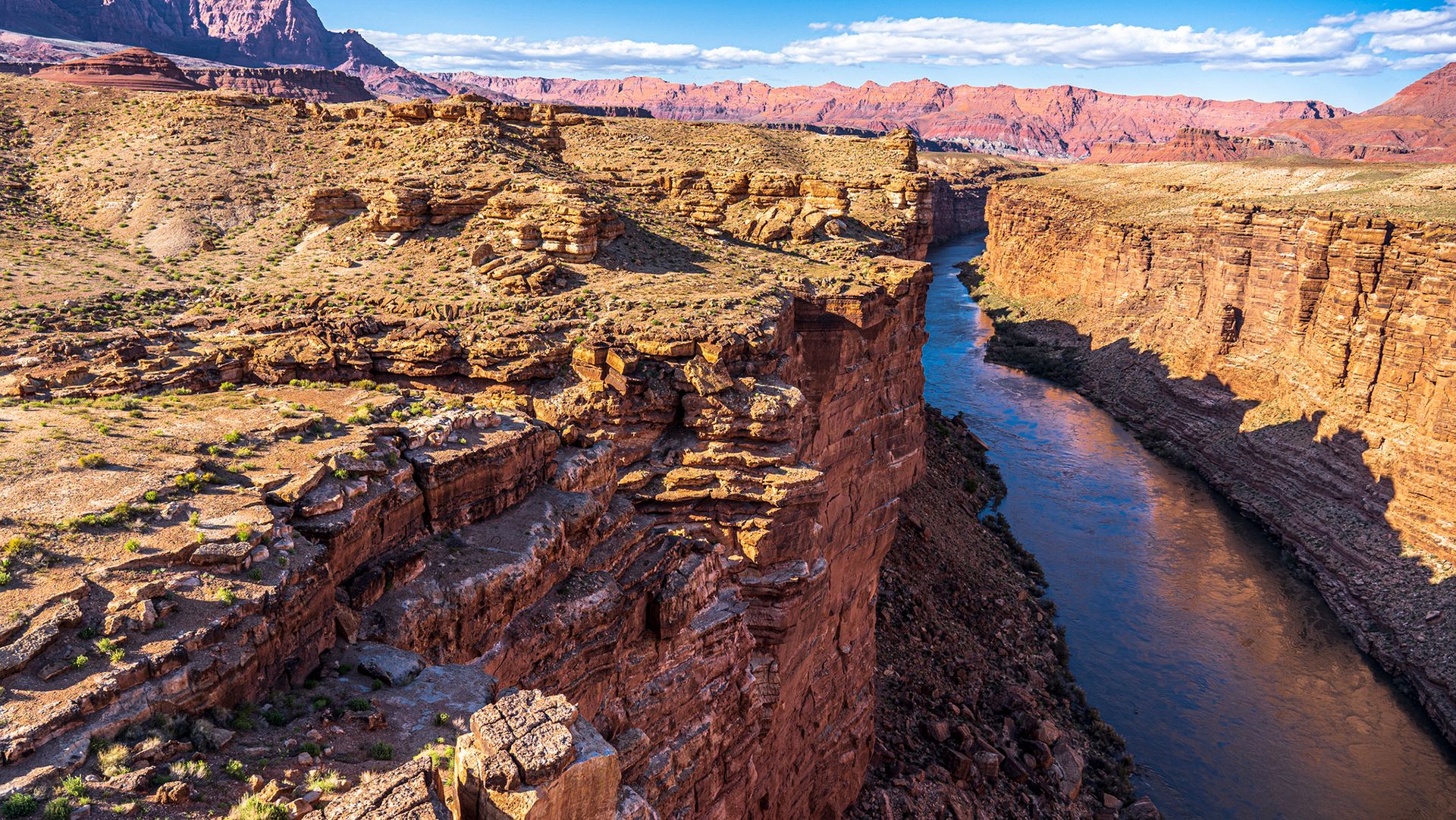
A significant portion of the Grand Canyon's geological history, spanning over a billion years, is absent from its rock layers. Scientists now believe they have discovered the reason behind this gap, known as the Great Unconformity. This missing period occurred between metamorphic and igneous rocks from 1.7 billion years ago and younger sedimentary rocks from 500 million years ago.
The Great Unconformity is not limited to the Grand Canyon; similar gaps in rock layers have been identified across North America, the Baltic region of Europe, and northern China. Researchers have long pondered the cause of this unconformity, with some suggesting a Snowball Earth scenario or glaciation as potential explanations.
A recent study, published in the journal Nature, offers a new perspective on the matter. Researchers modeled the movement of Earth's mantle, the planet's middle layer, during the time of the Great Unconformity's formation. Their findings suggest that heat-driven circulation of the mantle pushed the continents upward, facilitating erosion and causing sediments to be carried away to the ocean.
The model also indicates that in the past 540 million years, these same regions have sunk rather than risen, creating areas for sediments to accumulate and form neat layers on the continents. This marks the end of the Great Unconformity. The study co-author, Nicolas Flament, a geoscientist at the University of Wollongong in Australia, explained that the mantle's uplift and subsequent subsidence likely played a crucial role in shaping the geological history of these regions.
Written by urgent.news from Live Science's reporting — not their text. Machine-written — may contain errors; check the original before relying on it.