In north India, women protect native bees in traditional home walls
In the Himalayan region of Uttarakhand, India, traditional homes have a dedicated space to accommodate bees. Women then care for the bees as part of a beekeeping practice that has become a crucial sanctuary for indigenous bee populations facing severe environmental threats, reports contributor Swati Thapa for Mongabay. For generations, households in the region have […]
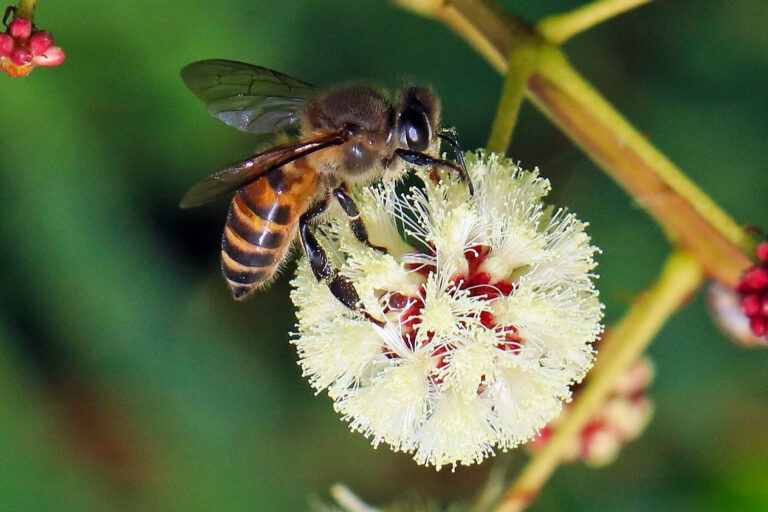
In the Himalayan region of Uttarakhand, India, traditional homes serve a unique purpose - housing native bees that face severe environmental threats. Women play a crucial role in this beekeeping practice, which has become vital for conserving indigenous bee populations. For generations, households in the region have coexisted with the Indian honey bee (Apis cerana indica), utilizing traditional "wall hives" - rectangular cavities carved directly into mud house walls that provide bees with entry and exit points.
A small door, accessible from within the house, is sealed with clay and cow dung and opened when honey is harvested. Historically, women have been responsible for tending to the bees, particularly as many men have migrated to urban areas for employment. According to Nagma Parveen, an assistant professor of biomedical sciences at Kumaun University, it is the women who have ensured the survival of A. cerana indica in Uttarakhand.
Parveen notes that traditional beekeeping is practiced as a sacred cultural custom, rather than a commercial one, with women regularly maintaining hives and providing supplemental food like amaranth or hemp seed powder during winter months when natural food sources are scarce. The thick mud construction of these wall hives offers essential insulation against extreme mountain cold, storms, and rain, safeguarding bees that cannot safely forage when outdoor temperatures fall below 10-13°C (50-55°F).
However, this traditional ecosystem is facing increasing threats due to rapid architectural changes and climate impacts. A study in Uttarakhand's Chamoli district found that the proportion of traditional wall hives has significantly decreased, putting the future of the indigenous bee populations in jeopardy.
Written by urgent.news from Mongabay's reporting — not their text. Machine-written — may contain errors; check the original before relying on it.