These Robotic Arms Are Powered by Algae. Watch How They Move
The key to the movement of these flexible robots is the algae’s photosynthetic capabilities.
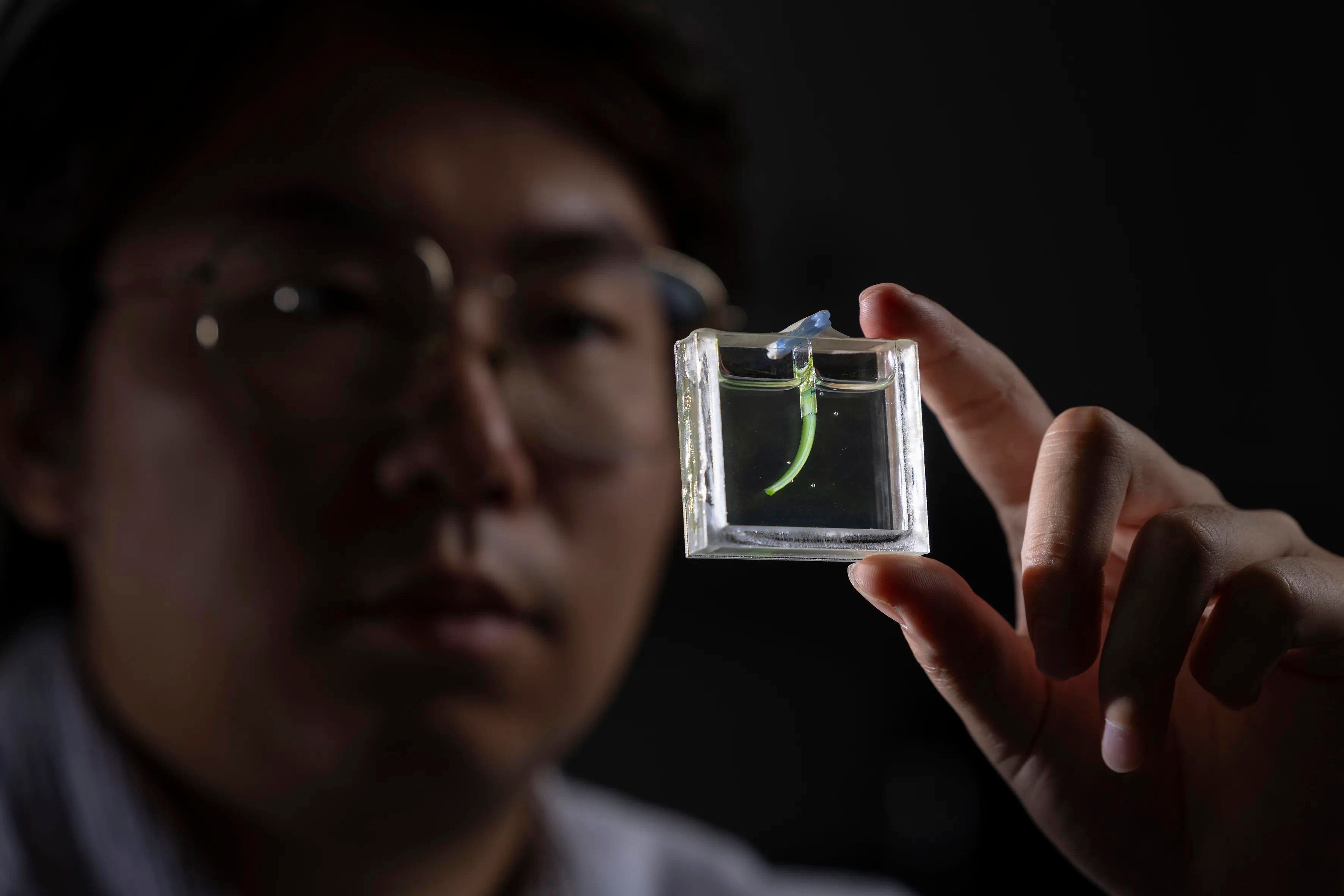
Researchers at Delft University of Technology in the Netherlands have created a soft robotic arm powered entirely by algae. Unlike traditional robots, which are typically made of metal and wires, these soft actuators are flexible and resemble the human hand. The arm's movement is generated by the photosynthesis of algae, which alters the pH of its surrounding environment, causing the arm to bend.
The algae create a local pH shift that causes one layer of hydrogel on the arm to swell while the other layer shrinks, controlling the arm's movement. The localized effect of the algae's activity makes these robots more environmentally friendly and less likely to cause any contamination. The team has constructed various soft robotic devices, including a gripper that can grasp and lift lightweight objects using only light as an energy source.
These soft robots are also self-sustaining, requiring minimal external energy input and no complex mechanical parts. In the future, this technology could be used for autonomous agricultural equipment or fluid control in lab-on-a-chip devices, among other applications.
Written by urgent.news from Wired's reporting — not their text. Machine-written — may contain errors; check the original before relying on it.
This story
This is one outlet's version. Read the fullest account.