The Attack Surface Nobody Owns- How Internal APIs Expand Cloud-Native Security Exposure
An endpoint that is not reachable from the internet is not the same as an endpoint that is protected. Ask a team to list its exposed attack surface, and the answer usually starts at the edge: the gateway, the load balancer, the public routes. For cloud native security teams, internal The post The Attack Surface Nobody Owns- How Internal APIs Expand Cloud-Native Security Exposure appeared first on…
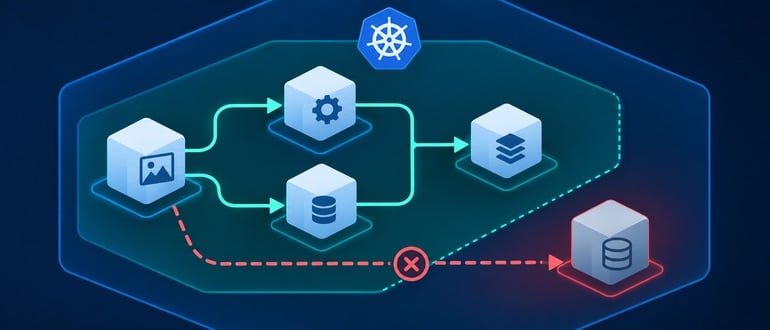
Attack surface refers to the potential points of entry for an attacker to compromise a system. In the context of cloud-native environments, internal APIs often go unnoticed during security assessments. Many security teams prioritize public-facing endpoints, such as gateways, load balancers, and public routes, while overlooking internal APIs that reside behind the perimeter.
This oversight is problematic because attackers typically only need a single point of entry to gain access. A survey conducted by the CNCF in January 2026 revealed that 82% of container users run Kubernetes in production, leading to increased east-west traffic between services. However, internal dependencies often lack the same level of scrutiny as public routes, making them vulnerable.
Unexamined dependencies can conceal active internal APIs with consumers, privileged access, and no clear inventory. For instance, an image-processing worker handling user uploads may contain a vulnerable parsing library, providing an attacker with code execution within the container. With limited scrutiny, the worker holds little importance and contains no sensitive data, leaving it unmonitored.
Attackers can then exploit this weakness by reading the mounted service account token, which grants permissions to list Services within the namespace. This information aids in identifying potential targets, including a pricing-admin service that accepts requests without credentials. The attacker's lateral movement occurs through a series of permitted calls, bypassing mutual TLS, which merely verifies the workload's identity without considering its legitimate functions.
To address this issue, cloud-native security solutions must evaluate internal APIs with the same rigor as public ones. Implementing strong service identity, adhering to authorization per route, and employing permissive-failure policies are crucial steps. Additionally, observing observed traffic and creating default-deny policies with explicit allowances are essential.
By identifying and securing internal APIs, teams can significantly reduce the attack surface and prevent lateral movement. Establishing ownership, data classification, and least-privilege, short-lived credentials for workloads are fundamental practices. Including internal routes in threat modeling ensures a comprehensive security approach, leaving no internal API unaccounted for.
Written by urgent.news from Container Journal's reporting — not their text. Machine-written — may contain errors; check the original before relying on it.