SDG Goals In Education: Big Challenge Before India
The Sustainable Development Goals (SDGs), adopted by the United Nations in 2015, represent a global commitment to build a more equitable, prosperous, and sustainable world by 2030. Among the seventeen goals, SDG 4 (Quality Education) and SDG 8 (Decent Workand Economic Growth) are closely interconnected. Quality education creates skilled and responsible citizens, while decent employment transforms…
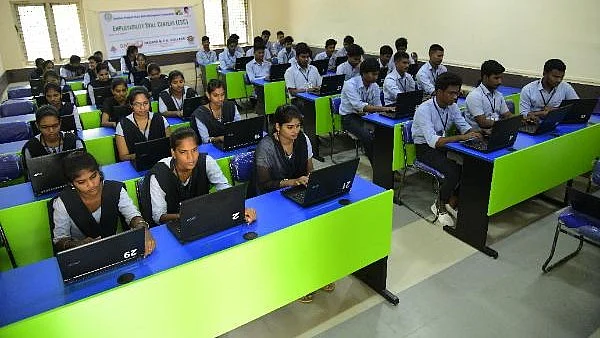
The Sustainable Development Goals (SDGs), adopted by the United Nations in 2015, include a focus on quality education and decent work and economic growth, which are interconnected goals. For India, with its vast youth population, achieving these goals is crucial for national and global progress. As the world approaches the end of the 2030 Agenda, India's progress in these areas becomes a key question.
India has made significant progress towards SDG 4 (Quality Education). The National Education Policy (NEP) 2020 has set a comprehensive roadmap for educational transformation, emphasizing holistic learning, digital technologies, vocational education, and foundational literacy. Enrollment has increased, with over 24 crore students currently in schools, and dropout rates have decreased.
Higher education enrolment has also risen, with the Gross Enrolment Ratio reaching around 30%. Infrastructure improvements include electricity, drinking water, sanitation facilities, and trained teachers in most schools, along with expanding internet connectivity and computer availability.
However, India still faces challenges in achieving SDG 4. Learning outcomes remain a concern, as many students struggle with foundational skills despite increased enrollment. The COVID-19 pandemic has worsened educational inequalities. Regional disparities persist, with educational outcomes varying significantly across states and between rural and urban areas.
Socio-economic barriers, such as those affecting disadvantaged communities and children with disabilities, continue to hinder access to quality education. The digital divide also poses a challenge, as access to reliable internet and digital devices remains uneven, particularly in rural areas.
Turning to SDG 8 (Decent Work and Economic Growth), India's economy has demonstrated resilience and ranks among the fastest-growing major economies. Economic reforms, digital transformation, startup promotion, infrastructure development, and manufacturing initiatives have created new opportunities across sectors. The Startup India initiative, Digital India, Skill India Mission, Make in India, and PM Vishwakarma Scheme have bolstered entrepreneurship and skill development.
India is now home to one of the world's largest startup ecosystems, generating employment in various sectors, including technology, healthcare, and renewable energy.
Despite these achievements, challenges remain in realizing SDG 8. Employment generation remains a significant issue, with a large portion of the workforce still in the informal sector lacking adequate wages, social security, and job protection. Underemployment and skill mismatches are also prevalent among graduates, who often lack industry-relevant competencies.
Graduate unemployment and skill mismatches are major concerns, as thousands of young people complete degrees but may not possess the necessary skills for the job market. Addressing these challenges is crucial for India's continued economic growth and the overall success of the SDGs.
Written by urgent.news from Free Press Journal's reporting — not their text. Machine-written — may contain errors; check the original before relying on it.