Practice Makes Precise: At CoRL, NVIDIA and Partners Reveal How Robots Rehearse Delicate Work in Simulation
Simulation, which has long been the proving ground for robots learning to walk, roll and hop, is now helping researchers teach robots tasks that require a finer touch: aligning gears, connecting cables and assembling small components. The shift from locomotion to manipulation is taking center stage at this week’s Conference on Robot Learning (CoRL) in […]
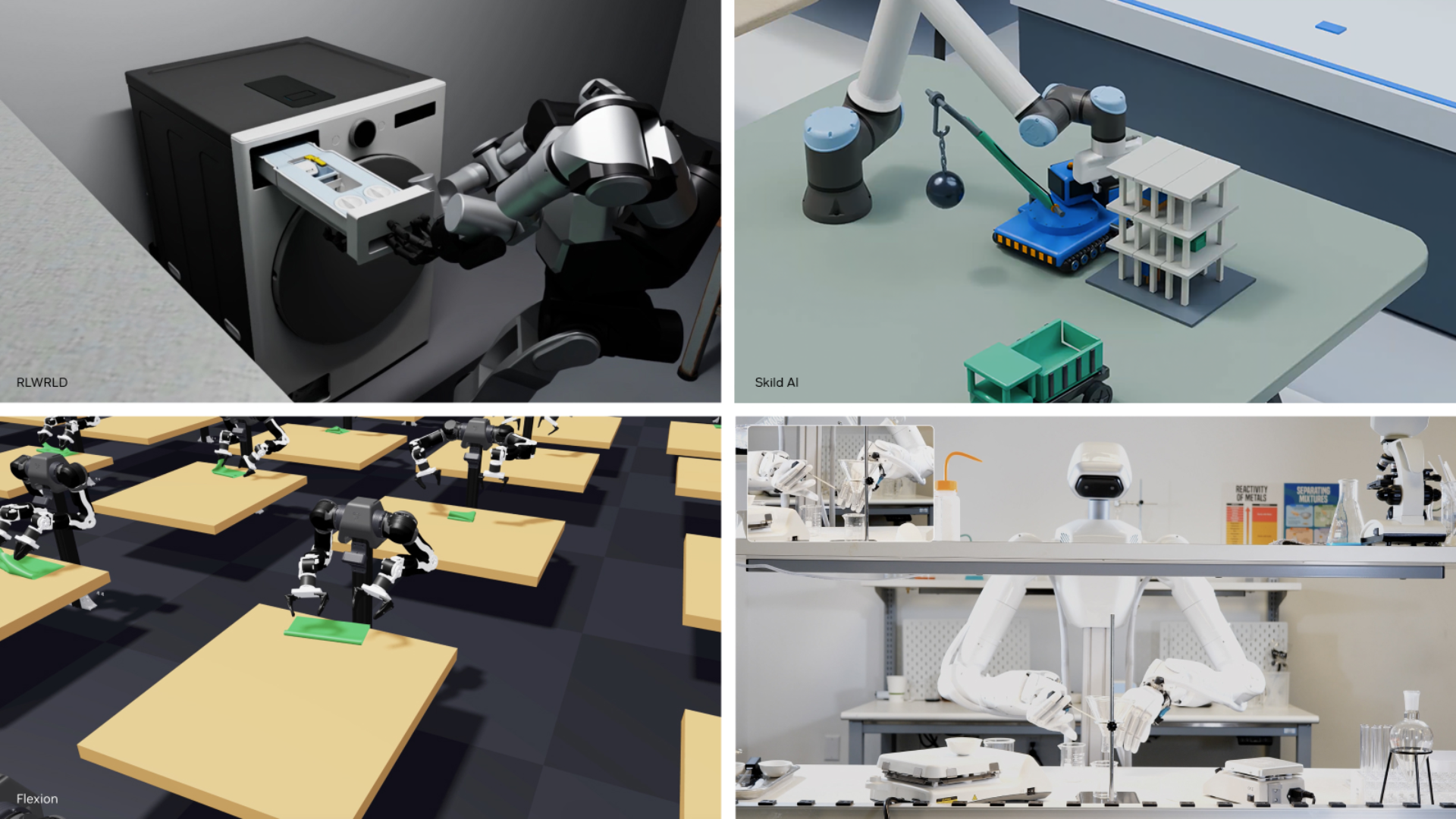
Robots are increasingly being trained in simulation to master delicate tasks requiring precision, such as aligning gears or assembling small components. This shift towards manipulation-focused simulation is a key focus at the CoRL Conference in Austin, Texas. NVIDIA is unveiling new open robotics technologies, including world action models, simulation tools, benchmarks, and agentic workflows at CoRL.
Two of NVIDIA's papers, GRAIL and RoboTTT, were among six finalists for the Best Paper Awards at CoRL. These advancements enable researchers to train robots on complex tasks, evaluate their performance under varying conditions, and use failures to guide further learning. NVIDIA is collaborating with partners like Ambi Robotics, Bosch Research, and Siemens to bring these innovations to the broader robotics community.
World action models, like NVIDIA's GR00T 2, enable robots to perceive their surroundings, anticipate the impact of their actions, and execute multistep tasks with high precision. GR00T 2, trained on diverse robot and human data, demonstrates impressive performance in various tasks with minimal demonstrations. Simulation plays a crucial role in training robots, allowing researchers to scale their efforts and refine skills before deploying them on physical robots.
NVIDIA Isaac Lab 3.0 facilitates this process by providing a flexible framework for setting up training environments with simulation-ready assets, switching between physics solvers, and applying reinforcement learning to foundation models.
Written by urgent.news from NVIDIA Blog's reporting — not their text. Machine-written — may contain errors; check the original before relying on it.