New AI Models Are Turbo-Charging Protein Design
Computer-designed protein therapeutics move from proof-of-concept to wet-lab validation and even clinical trials as the field heats up. The post New AI Models Are Turbo-Charging Protein Design appeared first on GEN - Genetic Engineering and Biotechnology News .
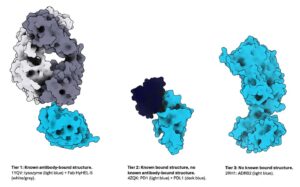
Artificial intelligence is revolutionizing the design of proteins and antibodies for drug development. Traditional biologic drug development is costly and time-consuming, with many promising candidates failing in preclinical or clinical testing. AI models can optimize protein design, making drug development more efficient and effective.
Sanofi, a leading pharmaceutical company, is advancing AI-based protein design from lab to market. Their program consists of three core areas: foundational models for sequence and structure analysis, property prediction and virtual screening, and de novo design. These models use a combination of public and in-house data and have been successful in creating functional binders that advance to multispecific drug development.
Multispecific drugs, which target multiple proteins simultaneously, are more effective but have a vast design space, making lab testing impractical. AI models streamline this process, enabling companies to design and test hundreds of thousands of sequences quickly and accurately.
Biolojic Design, an Israeli startup, uses AI to create "multibodies," which are human antibodies engineered to target multiple antigens. Unlike bispecific antibodies, multibodies maintain the structure of a conventional human IgG antibody while binding two or more targets. This approach leverages the advantages of traditional antibodies, such as manufacturing, regulatory, pharmacokinetic, and safety aspects, while providing multiple therapeutic effects with a single drug.
Multibodies retain the antibody's structure, with six complementarity-determining regions (CDRs) responsible for antigen binding. However, only a small portion of the CDRs is involved in binding. Biolojic's AI models identify unused "free real estate" in the CDRs and adapt them to recognize additional epitopes without compromising specificity.
The company's AI models generate a vast number of candidate antibodies, which are synthesized and tested in the lab, and the results are fed back into the model to refine its predictions. One of Biolojic's products, a conditional agonist/antagonist, has entered Phase II trials, demonstrating the potential of AI-driven protein design in drug development.
Written by urgent.news from GEN Biotechnology's reporting — not their text. Machine-written — may contain errors; check the original before relying on it.