I turned Obsidian into an AI browser, and it does what Gemini in Chrome does without my research leaving my vault
The browser I use for private work isn't actually a real browser
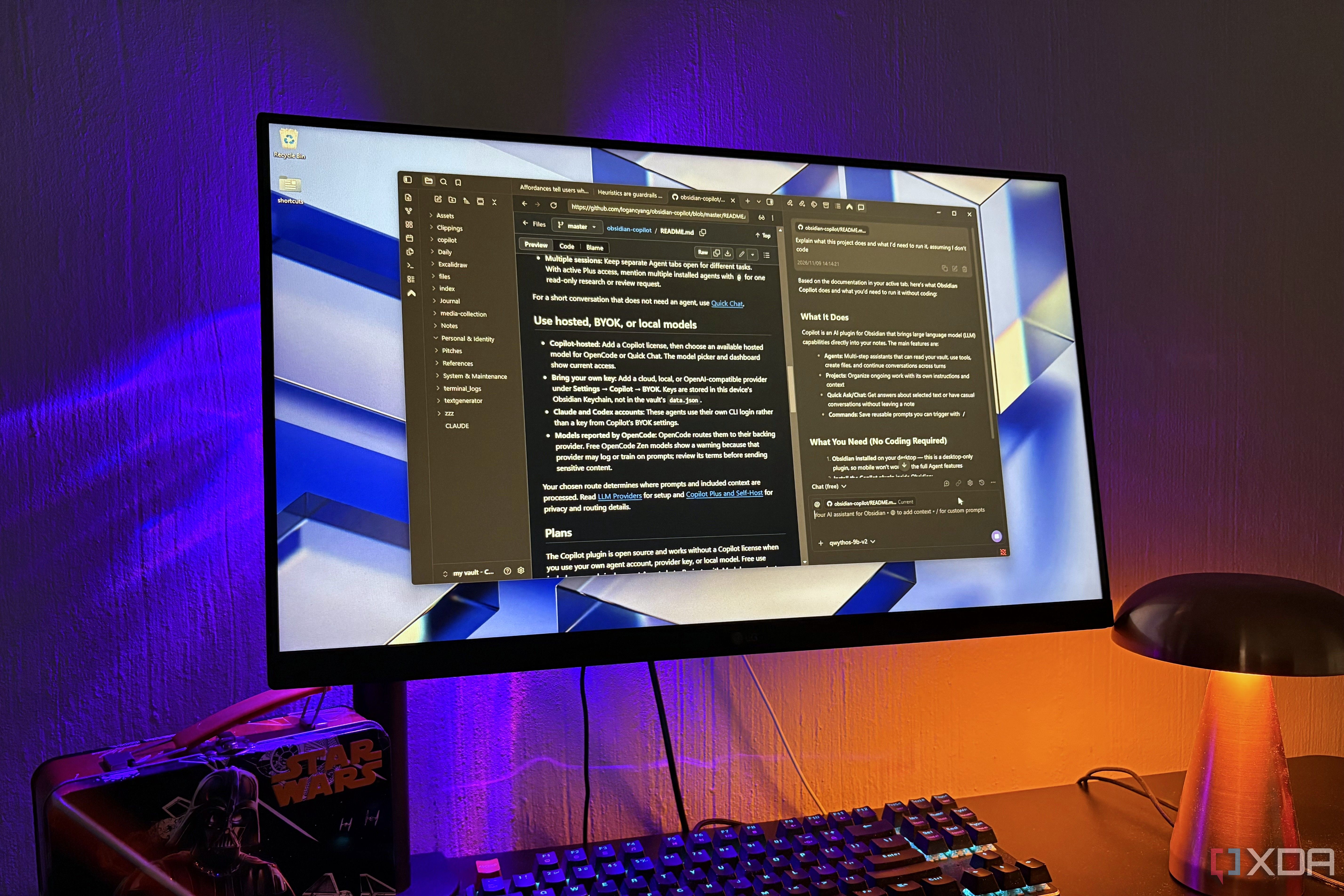
Obsidian, the popular note-taking app, has added an AI-powered browser feature that allows users to interact with web pages directly within their vault, without needing to leave or copy information between apps. This feature, enabled by the Web Viewer plugin, brings Chromium-based web browsing capabilities into Obsidian, allowing users to access and interact with web content seamlessly.
The AI-powered browser utilizes community plugins, such as Copilot, to attach web pages to a chat interface, enabling users to ask questions and receive answers directly from the page they are viewing. This functionality is similar to Google's Gemini browser assistant, which is integrated into Chrome. However, unlike Gemini, which sends web pages to external servers for processing, Obsidian's AI browser keeps everything local, preserving privacy and security.
To set up the AI browser in Obsidian, users need to install the Web Viewer plugin and the Copilot plugin. They then need to configure the Copilot plugin to connect to a local LLM (Large Language Model) server. Popular local LLM options include Qwythos 9B and Qwen 3.5 9B, which can be used without an API key. Once connected, users can open a web page in the Web Viewer and start interacting with it using the Copilot panel, which is docked alongside the Web Viewer tab.
The Copilot panel allows users to ask questions about the web page, and the AI model provides responses based on the content of the page. Users can also attach other notes, folders, or web tabs to the same chat, making it easy to compare information across multiple sources. The AI model can save prompts, which can be customized to reference specific notes, enabling more targeted and context-aware responses.
While the AI browser in Obsidian provides a powerful local alternative to cloud-based AI assistants, it does have some limitations. The local LLM can only process a limited amount of context, so very long web pages may struggle to be fully understood. Additionally, the AI model cannot interact with web pages in the same way as Gemini's auto-browsing features, which can click through and explore links on a user's behalf.
Written by urgent.news from XDA Developers's reporting — not their text. Machine-written — may contain errors; check the original before relying on it.
This story
This is one outlet's version. Read the fullest account.
- I use Gemini without typing a single word; I get way more done now androidpolice.com