Did Life Begin in an RNA World?
The earliest life forms may have emerged from self-copying RNA. The post Did Life Begin in an RNA World? first appeared on Quanta Magazine
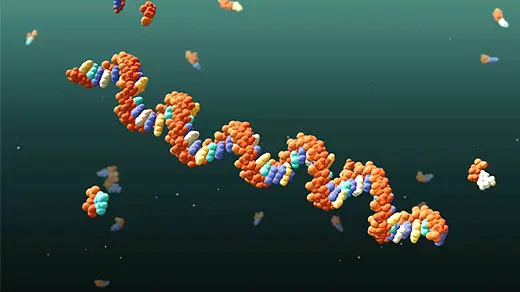
For decades, scientists have debated the origins of life on Earth. One prominent idea is the RNA world hypothesis, which proposes that life began as an RNA-based, self-replicating system. In this scenario, RNA molecules not only stored genetic information but also acted as catalysts for chemical reactions. This "RNA world" would have predated the emergence of DNA and proteins.
In the late 1980s, researchers discovered that certain RNAs could act as ribozymes, molecules capable of catalyzing chemical reactions independently of proteins. This finding bolstered the RNA world hypothesis, suggesting that RNA could have played a crucial role in the earliest stages of life.
In 1996, scientists created a ribozyme that could synthesize RNA, providing experimental evidence that RNA could replicate. This replication process, however, would be susceptible to errors, leading to genetic mutations. Over time, these mutations could give rise to more efficient replicators through natural selection, a process analogous to Darwinian evolution.
While the RNA world hypothesis is compelling in theory, there are significant challenges to its implementation. Experiments have shown that RNA evolution is difficult, as even minor mutations can disrupt catalytic function. Additionally, laboratory experiments have primarily yielded small RNA molecules, whereas the RNA world is thought to require larger molecules capable of complex replication and evolution.
However, recent research has provided some hope for the RNA world hypothesis. In a study led by Philipp Holliger at the MRC Laboratory of Molecular Biology, scientists discovered small RNAs that could replicate and catalyze the synthesis of other RNA molecules. One such RNA, named QT45, was just 45 nucleotides long and demonstrated self-replication ability.
The researchers also identified two other small RNAs with similar catalytic properties, suggesting that the emergence of self-replicating RNA molecules might be more feasible than previously thought.
These findings indicate that the RNA world hypothesis could have been a plausible pathway for the origin of life, even if the specific details of how it unfolded remain a mystery. Further research is needed to fully understand the complexities of this early stage of biological evolution.
Written by urgent.news from Quanta Magazine's reporting — not their text. Machine-written — may contain errors; check the original before relying on it.


