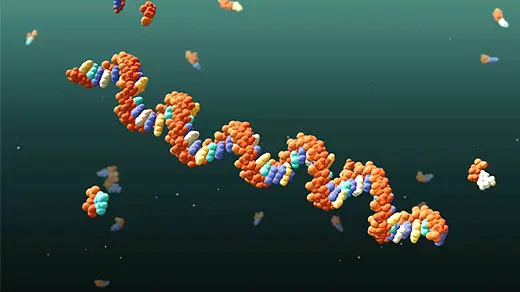
Chirality of 'trions' illuminates new paths for quantum optics
Scientists from Tokyo Metropolitan University have discovered that charged states made of two electrons and a positively charged hole (or vice versa) on atomically thin rolls of carbon atoms have a structure-derived "handedness" in how they interact with light. While electron-hole pairs, or "excitons," were known to keep the chirality of the underlying nanotube, the team showed that adding a…

We haven't written up this one. Phys.org has the full story — the link below goes straight to it.