CHAPEA Mission 2 Crew Reflects After 378 Days on Simulated Mars
After 378 days without windows, the sounds of the outside world, or real-time calls with family and friends, four research volunteers stepped out of NASA’s Mars Dune Alpha habitat on Oct. 31, completing the agency’s second yearlong Mars surface simulation. Ross Elder, Ellen Ellis, James Spicer, and Matthew Montgomery entered the roughly 1,700-square-foot, 3D-printed habitat at […]
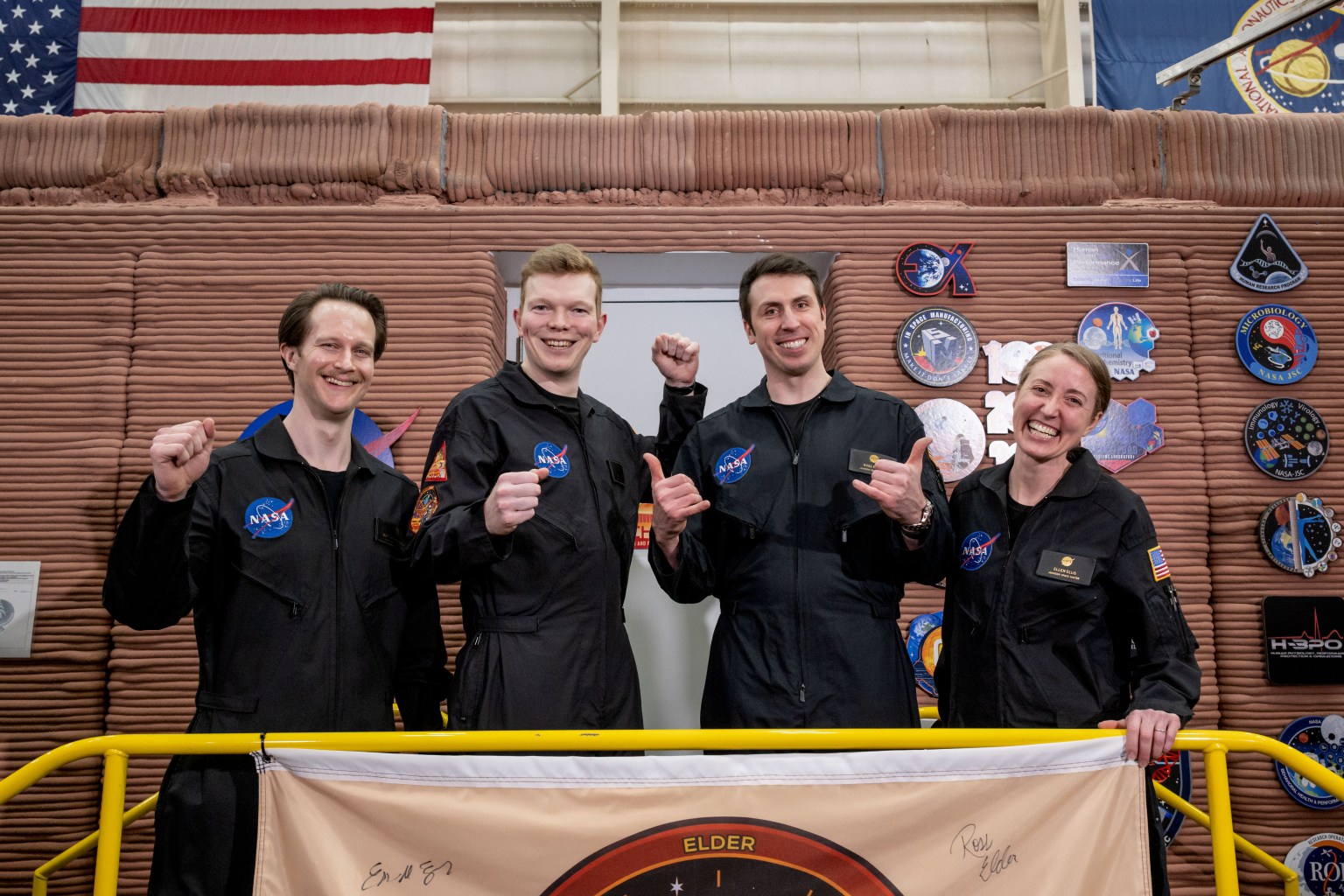
The CHAPEA Mission 2 crew concluded their 378-day simulated Mars mission at NASA’s Johnson Space Center in Houston on October 31, 2026. After residing in the 1,700-square-foot, 3D-printed habitat known as Mars Dune Alpha, the four research volunteers emerged from isolation, concluding their contribution to human exploration beyond Earth.
The crew – Ross Elder, Ellen Ellis, James Spicer, and Matthew Montgomery – engaged in various activities during their time in the habitat. These included simulated Marswalks, robotic operations, habitat maintenance, exercise routines, and crop cultivation. Johnson Space Center Director Vanessa Wyche emphasized the significance of the crew's work, stating that it is about preparing for the challenges of human exploration and paving the way for future missions to the Moon and Mars.
Family, friends, and colleagues welcomed the crew as they exited the building housing the Mars Dune Alpha habitat. NASA astronaut Jack Hathaway provided context to the crew's experience, comparing their isolation to the demanding 237-day mission aboard the space station. Hathaway also highlighted NASA's recent achievements, such as the Artemis II astronauts' record-setting journey around the Moon and the 25th anniversary of continuous human presence aboard the International Space Station.
The CHAPEA crew navigated limited resources and communication delays of up to 22 minutes each way while collecting health and performance data. Ross Elder, the mission's commander and test pilot, brought his U.S. Air Force background to the role of leading the crew. He found the simulated Marswalks and robotic exploration "uncannily similar" to operating as part of a flight, emphasizing the importance of nutrition, exercise, and rest in sustaining the demanding pace.
Elder praised his crewmates for their combined strengths, describing them as having formed one of the finest teams he has ever been part of. Ellen Ellis, the mission's medical officer and tactical thinker, brought her unique perspective to the crew's experience.
Written by urgent.news from NASA's reporting — not their text. Machine-written — may contain errors; check the original before relying on it.
This story
This is one outlet's version. Read the fullest account.