CHAPEA Mission 2 Crew Reflects After 378 Days on Simulated Mars
After 378 days without windows, the sounds of the outside world, or real-time calls with family and friends, four research volunteers stepped out of NASA’s Mars Dune Alpha habitat on Oct. 31, completing the agency’s second yearlong Mars surface simulation. Ross Elder, Ellen Ellis, James Spicer, and Matthew Montgomery entered the roughly 1,700-square-foot, 3D-printed habitat at […] The post CHAPEA…
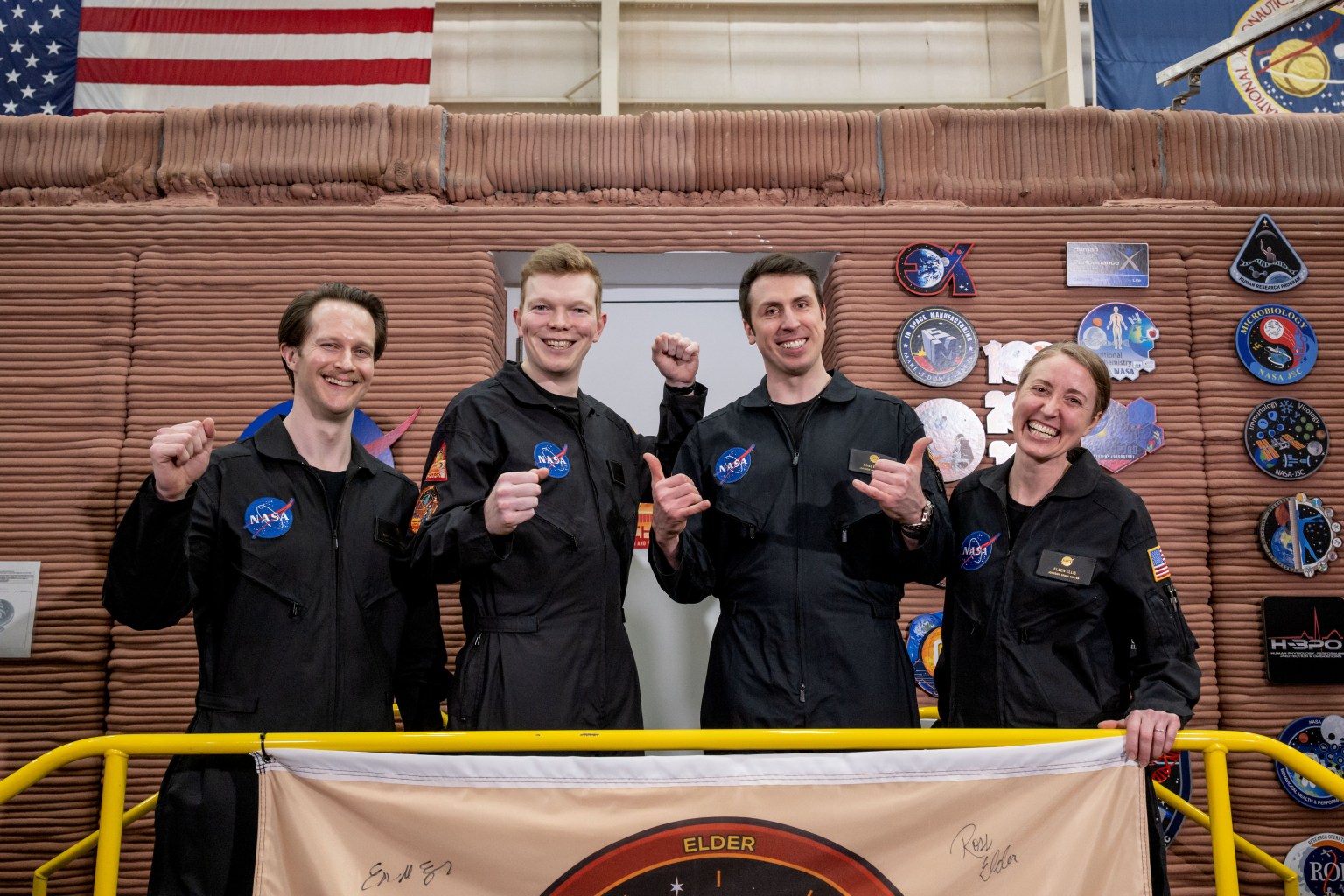
NASA's CHAPEA (Crew Health and Performance Exploration Analog) Mission 2 crew concluded their 378-day simulated Mars mission on Oct. 31, 2026, at the agency's Johnson Space Center in Houston. The four research volunteers, Ross Elder, Ellen Ellis, James Spicer, and Matthew Montgomery, exited the 1,700-square-foot, 3D-printed habitat known as Mars Dune Alpha, marking the end of their year-long expedition.
The crew participated in various tasks including simulated Marswalks, robotic operations, habitat maintenance, exercise, and crop cultivation. Johnson Space Center Director Vanessa Wyche emphasized that the crew's work was crucial for preparing for the challenges of human exploration beyond Earth, gathering vital knowledge on crew health and performance, and paving the way for future missions to the Moon and Mars.
NASA astronaut Jack Hathaway provided context to the crew's experience, noting that he completed a 237-day mission aboard the space station and that Artemis II astronauts traveled around the Moon, setting a record for the farthest humans have traveled from Earth. Hathaway praised the crew's physiological and psychological strength, teamwork, and human grit.
Elder, the CHAPEA Mission 2 commander and test pilot, described the simulated Marswalks and robotic exploration as "uncannily similar" to operating as part of a flight, highlighting the importance of nutrition, exercise, and rest for future explorers. Ellis, the medical officer and tactical thinker, praised the crew's ability to combine their strengths and create a strong team dynamic.
Written by urgent.news from NASA Science's reporting — not their text. Machine-written — may contain errors; check the original before relying on it.