Beyond elite conflicts: How state surveillance swept up lives
A massive wiretapping scandal targeting over 6,000 people, ranging from politicians to activists, reveals that Indonesia’s surveillance apparatus isn't just guarding the state. It's systematically dismantling democracy from the shadows.
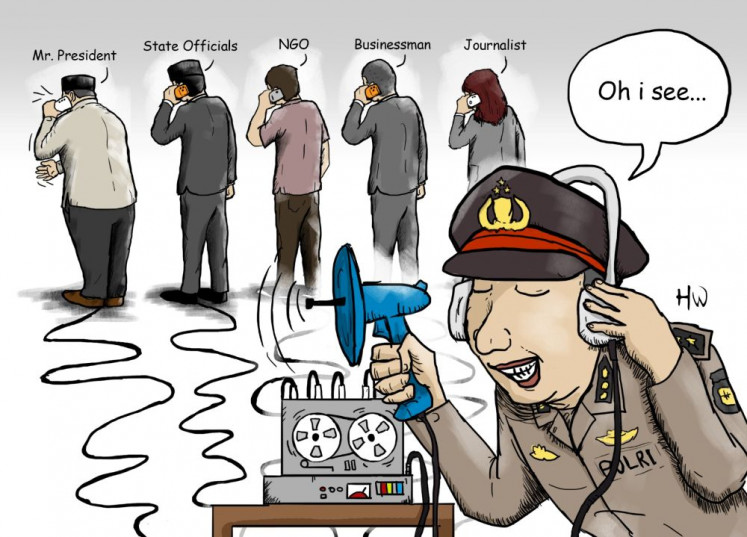
A wiretapping scandal, implicating over 6,000 individuals from various walks of life, has exposed a deeper issue in Indonesia's surveillance apparatus. The controversy began with allegations against former National Police chief Gen. Listyo Sigit Prabowo and his associates, but the actual scope of the operation was far broader. According to the National Police's Criminal Investigation Agency (Bareskrim), the surveillance network targeted not just the President, but a wide range of public figures, including politicians, government officials, journalists, activists, and entrepreneurs.
The operation bypassed judicial warrants and procedural checks, raising serious concerns about the erosion of civil liberties and the rule of law. Bareskrim head Comr. Gen. Asep Safrudin revealed that the surveillance system, Lawful Interception Management System (LIMS), was used to collect phone numbers without proper legal oversight.
This revelation echoes George Orwell's warning about total surveillance, highlighting the critical risk of covert policing that undermines democracy. The situation has already been flagged in Amnesty International's May 2024 report, which detailed how Indonesian state bodies acquired military-grade spyware through opaque channels.
Written by urgent.news from The Jakarta Post's reporting — not their text. Machine-written — may contain errors; check the original before relying on it.
This story
This is one outlet's version. Read the fullest account.
- Beyond elite conflicts: How state surveillance swept up lives thejakartapost.com