Analysis:AI power rush sends data centres hunting for used turbines and jet engines
As artificial intelligence technology surges, data centers worldwide are scrambling for power, leading to a surge in demand for energy-intensive equipment. Utilities, developers, and firms are scouring the globe for second-hand gas turbines, refurbished machines, and even converted jet engines, as new equipment delivery times stretch into the next decade. Despite concerns over AI's risks and recent stock sell-offs, data center energy demand is skyrocketing, creating a critical bottleneck for essential power infrastructure.
Senior analyst Aurora Tenorio from Wood Mackenzie notes that US turbine market lead times are projected for 2030 to 2031. This urgency is pushing some companies to seek second-hand and refurbished equipment, as well as jet engine-derived turbines, rather than waiting for new orders to clear. Ana Amicarella, CEO of EthosEnergy, an equipment services provider, confirms that the secondary market is currently very hot, with escalating prices for sought-after equipment.
However, this potential solution may only partially address the power supply squeeze, as the market is already constrained with limited excess supply. Challenges like air permits, grid access, and other factors also contribute to delays. While estimates of the secondary market's contribution to the global turbine supply worth about $25 billion annually remain unclear, its emergence indicates the significant impact the data center boom has had across industries.
AI infrastructure firm Crusoe, for example, recently ordered 13 aeroderivative gas turbines from US-based ProEnergy, based on jet engines made by GE Aerospace, describing the move as a strategic step to scale quickly. These turbines, with a joint capacity of 650 megawatts, will power Crusoe's AI data center projects in the US. Despite the appeal of used, refurbished, or repurposed equipment, data centers and their operators have become major customers of gas turbines, a market that was once dominated by traditional utilities.
Worldwide orders now exceed 100 gigawatts, well above the estimated global production capacity of 60 to 70 gigawatts. US data centers alone account for nearly 17 gigawatts of demand this year, with projections suggesting this number could triple by 2028. Global gas turbine manufacturing capacity is growing and expected to reach around 87 gigawatts in 2028, but it will still fall short of the 129 gigawatts in expected turbine power demand.
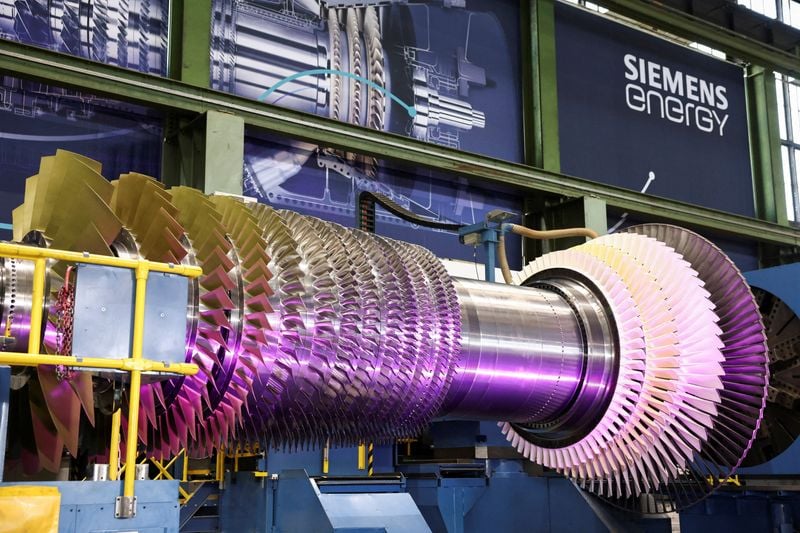
Siemens Energy, GE Vernova, and Mitsubishi Heavy Industries, the dominant players in the market, acknowledge that the AI boom has driven orders beyond their production capacity. In the US, the average delivery time for a gas turbine is now six years. Used, refurbished, or repurposed equipment comes with its own challenges, including unclear maintenance histories, limited life remaining, and weak long-term servicing.
Converted jet engines raise concerns about their suitability for continuous power generation. Nevertheless, the market's appeal lies in the years-long waiting times. Every few weeks, companies inquire about finding used gas turbines for data centers. Costs also vary, with well-maintained used units selling for about $1.5 million to $1.7 million per megawatt, while refurbished units go for approximately $1.3 million. New turbines, on the other hand, cost around $2 million to $2.5 million per megawatt.
Smaller, cheaper units can experience even greater discounts. For instance, two 14.5-MW turbines from Solar Turbines, a Caterpillar unit, recently sold for $12.5 million, or around $430,000 per megawatt, compared to about $35 million for new ones, which would take five years to deliver. Developers often resort to deploying more than 100 small turbines at a single site and mixing models and brands when larger options are scarce.
The AI boom is also affecting other players beyond data centers. The Tennessee Valley Authority, a federally owned US utility, reports significant price increases for all equipment over the past two years. Jim Matheson, CEO of the National Rural Electric Cooperative Association, notes that its members are facing unprecedented lead times and surging prices, turning to every viable option, including refurbished turbines, to secure new capacity.
Written by urgent.news from Channel News Asia's reporting — not their text. Machine-written — may contain errors; check the original before relying on it.