Möglicher Machtwechsel?: Israel unter Eisenkot: Was sich ändern könnte
Eine Mehrheit der Abgeordneten empfiehlt Gadi Eisenkot für den Auftrag zur Regierungsbildung. Doch der Weg ins Amt ist steinig. Und wie weit könnte ein Kurswechsel unter ihm tatsächlich gehen?
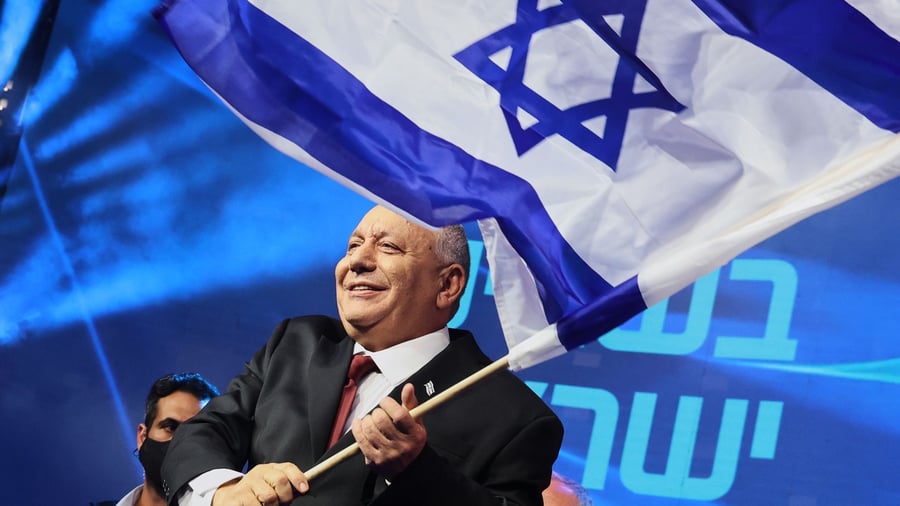
An Israeli parliamentary vote has elected former military chief Gadi Eisenkot as the country's next prime minister, though the path to power remains unclear. President Izchak Herzog has concluded consultations with parties and will appoint Eisenkot as the government-forming task's recipient this Sunday. It is widely expected that the 66-year-old opposition politician will receive the mandate.
However, whether Eisenkot will amass a majority behind him is still uncertain. A race to form the government begins as soon as the mandate is granted. Eisenkot would have 28 days to forge a coalition and could receive an additional 14 days if needed. During the efforts to form a government, he will have to contend with opposition from Benjamin Netanyahu, the former prime minister.
Netanyahu, 77, is likely to attempt to prevent the power shift through political maneuvers. If Eisenkot fails, another parliament member has 28 days to take over. Should this also prove unsuccessful, at least 61 members of parliament can agree on a candidate within 21 days, who will then have 14 more days to form the government.
If this attempt fails as well, the parliament will automatically disband. A new election must take place within 90 days. Under Eisenkot, several changes may occur - and others may not. Experts predict that Netanyahu will become increasingly viewed as an obstacle to Israel's foreign relations. However, a government under Eisenkot would not automatically signify a fundamental change in security and foreign policy.
Eisenkot's foreign policy experience is limited. As a former chief of staff, he is considered a conservative on security policy. Yet, Eisenkot is personally shaped by war: he lost his son and two nieces in the Gaza Strip as soldiers. Despite this heavy personal cost, he feels a special responsibility for Israel's future. Eisenkot has served as head of the Israeli military from 2015 to 2019.
He studied political science in Haifa and is seen as a specialist in Lebanon's Hezbollah militia. A father of five, Eisenkot is from Moroccan immigrant stock. In personal appearance, Eisenkot differs significantly from Netanyahu. While the longtime prime minister meticulously stages his public presence and is known as a skilled speaker, Eisenkot appears reserved and down-to-earth.
Observers describe him as authentic and team-oriented. The party name Jaschar means "straightforward" and is also part of his political self-image. Eisenkot rejects overthrowing Iran's leadership as a war goal. In dealing with Iran, Eisenkot and Netanyahu share similar goals: both aim to prevent the country's atomic weapons development and halt its missile program.
However, Eisenkot contradicts Netanyahu on overthrowing Iran as a war goal. How Eisenkot will specifically behave as prime minister - meaning whether to continue or end the war - remains unclear. Eisenkot intends to curb settler power in the West Bank. There will be a "big difference" between Eisenkot and Netanyahu on this issue, said political scientist Jonathan Rynhold.
Rynhold expects Eisenkot to "hit hard" against violent settlers. Settlement policy, however, is not fundamentally questioned by Eisenkot. During Netanyahu's tenure, Israel significantly advanced settlement construction in the occupied West Bank and expanded Israeli control over areas claimed by Palestinians for a future state. Eisenkot's approach to further action in the largely destroyed Gaza Strip is expected to align more closely with Washington, according to Rynhold.
The focus would be on disarming the Islamist terrorist organization Hamas and establishing a new Palestinian administration. Netanyahu had previously hindered such attempts. Eisenkot, however, once described the vision of an independent Palestinian state living peacefully alongside Israel as a "bitter mistake." Rynhold believes that Eisenkot might be swayed under better political circumstances to support the two-state solution, provided Palestinians take all necessary steps to ensure Israel's security.
Eisenkot is more pragmatic than Netanyahu. Strengthening ties with the United States, Eisenkot has announced his intention to specifically strengthen relations with the US, Israel's most important ally. It is ironic, Eisenkot told the "Jerusalem Post," that it is Netanyahu, who likes to be dubbed "Captain America," who has brought Israel to the lowest point in its relations with American society.
Eisenkot accuses Netanyahu of having long split Israeli society. Now, he aims to replace him and demonstrate that there is another way. However, after the Midterms, the political course of Washington in the Middle East could change. In this case, not only would Eisenkot have to appease Washington, but he might also have to adapt to a new wind from the US.
Written by urgent.news from Handelsblatt's reporting — not their text. Machine-written — may contain errors; check the original before relying on it.