Scare campaigns: Victoria’s major parties trade blows over AI-generated videos of leaders in election ads
Transparency and advertising experts say trust in politics could be further eroded as a result of ‘lies, deepfakes and AI-generated politicians’ Get our daily political email , free app or daily news podcast It’s the night of Halloween and Jess Wilson has appeared on social media feeds with a warning about a scary prospect: “Americanised healthcare” under a future Liberal government. “If you had…
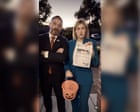
As Halloween approaches, a startling AI-generated video surfaces, depicting Victoria's Liberal leader Jess Wilson advocating for Americanized healthcare. The video, posted by Victorian Labor, features Wilson claiming that a heart attack would cost $150,000 under a Liberal government. However, Wilson herself has stated that she never made such a claim. The video also features One Nation's Victorian leader Warren Pickering, who appears to be wearing a Liberal party badge.
The claims made in the video are based on a statement Wilson gave after announcing a $1.27bn plan to pay private hospitals to conduct public elective surgeries. When asked about the potential dangers of "Americanising" Victoria's healthcare system, Wilson said it was not a concern. Her party's premier, Ben Carroll, defended the video's content, claiming that Wilson had indeed said it was acceptable to Americanize the state's healthcare system.
In response, Wilson called the video a "desperate smear campaign" and insisted that her party would not "Americanise" the healthcare system. Despite these denials, the Liberal party has been using AI-generated content on social media, including a video of Premier Ben Carroll sleeping at his desk. This comes after a front-page Herald Sun story accused Labor leader Daniel Andrews of taking naps on the job.
The use of AI-generated deepfakes in political advertising has raised concerns among transparency and advertising experts. Clancy Moore, CEO of Transparency International Australia, argues that such tactics further erode trust in politics. Media researcher Timothy Koskie notes that while misinformation in political messaging predates AI, the rise of fake videos and images makes it easier to deceive voters. He calls for accountability and suggests that small fines could be an effective deterrent.
Moore and the Greens are calling for the introduction of truth in political advertising laws in Victoria, similar to those already in place in the ACT and South Australia. These laws would ban the use of AI-generated deepfakes in electoral ads that depict actions a person did not perform without their permission. The Greens have also urged parties to sign a memorandum of understanding outlining standards of behavior during the campaign, including the prohibition of deceptive AI content.
Written by urgent.news from The Guardian Australia's reporting — not their text. Machine-written — may contain errors; check the original before relying on it.