Nasa telescope launched in 2004 to plunge back to Earth after failed rescue mission
Neil Gehrels Swift Observatory is expected to re-enter Earth’s atmosphere Wednesday, burning up in the process Nasa’s Neil Gehrels Swift Observatory, which has spent two decades studying the most powerful explosions in the cosmos, is expected to re-enter the Earth’s atmosphere on Wednesday, burning up in the process. The satellite, which was designed to operate with its three telescopes for just…
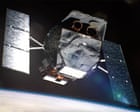
NASA's Swift telescope, a defunct space observatory, is anticipated to re-enter Earth's atmosphere and descend to the ground on November 4. After initial efforts to prolong its life failed, the telescope was decommissioned on October 20. The 1.5-tonne observatory, launched in 2004 to study high-energy gamma-ray bursts, has detected at least 1,400 supernovas during its 22-year mission. While it may not be as well-known as Hubble or James Webb Space Telescopes, Swift has been invaluable for studying cosmic phenomena.
The telescope's exact landing location remains uncertain, as it is now uncontrolled and moving at around 8 kilometers per second. Predictions vary, with some sources estimating a re-entry time of 4:37am AEDT on November 4, while others suggest 8:11pm AEDT. The telescope's orbit could take it over various regions, including northern Australia, Africa, India, Southeast Asia, South-East Asia, South and Central America. If 70% of Earth is covered by ocean, three out of ten chances of the re-entry landing on land are likely.
Swift is expected to burn up upon re-entry, with some components, like dense tungsten parts or mirror components, potentially surviving. Dr Tucker, an astrophysicist, expressed sadness over the demise of the telescope, noting that it played a crucial role in gamma-ray astronomy and had a unique ability to observe in visible light, ultraviolet, and X-ray wavelengths. Hubble, another aging space telescope, is also predicted to make an uncontrolled re-entry in the near future.
Written by urgent.news from ABC News AU's reporting — not their text. Machine-written — may contain errors; check the original before relying on it.
This story
This is one outlet's version. Read the fullest account.
- A 3,200-pound NASA spacecraft could fall to Earth tonight livescience.com
- NASA's Swift telescope predicted to plummet back to Earth tomorrow abc.net.au
- NASA telescope is plunging back to Earth after 22 years in orbit cbsnews.com
- ‘Swift’ telescope to crash into Earth after NASA rescue attempt fails english.elpais.com
- NASA's Voyager 1 set to script history: Farthest human-made object to reach one light-day from Earth hindustantimes.com
- NASA's Swift observatory is expected to return to Earth on November 4 engadget.com
- 1.5-tonne Nasa observatory to re-enter Earth today; debris may fall in India timesofindia.indiatimes.com
- NASA's Swift space telescope is about to crash to Earth r.smartbrief.com