What Vera Rubin observatory’s first new dwarf planet means
Back in 2006, the International Astronomical Union controversially demoted Pluto . This composite image of Pluto and its largest moon, Charon, was based on photographs taken by the New Horizons mission as it flew by the Plutonian planetary system back in 2015. Charon’s appearance is vastly different from Pluto’s, but both bodies are shown with the correct relative size and albedo. The surface…
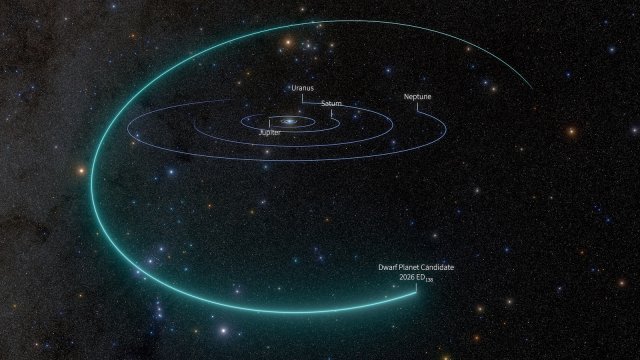
The Vera C. Rubin Observatory, located in Chile, has identified a remarkable dwarf planet named 2026 ED 138. The observatory, which uses an 8.4-meter telescope and a 3200-megapixel camera, conducts a multi-color, decade-long survey of the optical sky. This discovery highlights the observatory's unique sensitivity and cadence, allowing it to uncover faint, distant objects in crowded fields of view.
Written by urgent.news from Big Think's reporting — not their text. Machine-written — may contain errors; check the original before relying on it.
This story
This is one outlet's version. Read the fullest account.
- New dwarf planet discovered by Rubin? earthsky.org
- Icy Object Spotted Beyond Pluto Emerges as New Dwarf Planet Candidate in the Solar System's Outskirts discovermagazine.com
- Astronomers Discover a Possible New Dwarf Planet in Our Solar System wired.com
- Rubin Observatory reveals its first dwarf planet candidate in our solar system phys.org
- The Rubin Observatory Finds Its First Dwarf Planet Candidate universetoday.com
- New Vera C. Rubin telescope spots possible new dwarf planet beyond Pluto cbc.ca
- The Vera C. Rubin Observatory may have just discovered our solar system’s sixth dwarf planet scientificamerican.com