James Webb Space Telescope uncovers new clues about the origins of 'interstellar invader' comet 3I/ATLAS
The findings are another clue towards understanding the origins of 3I/ATLAS and the planet-forming conditions around other stars.
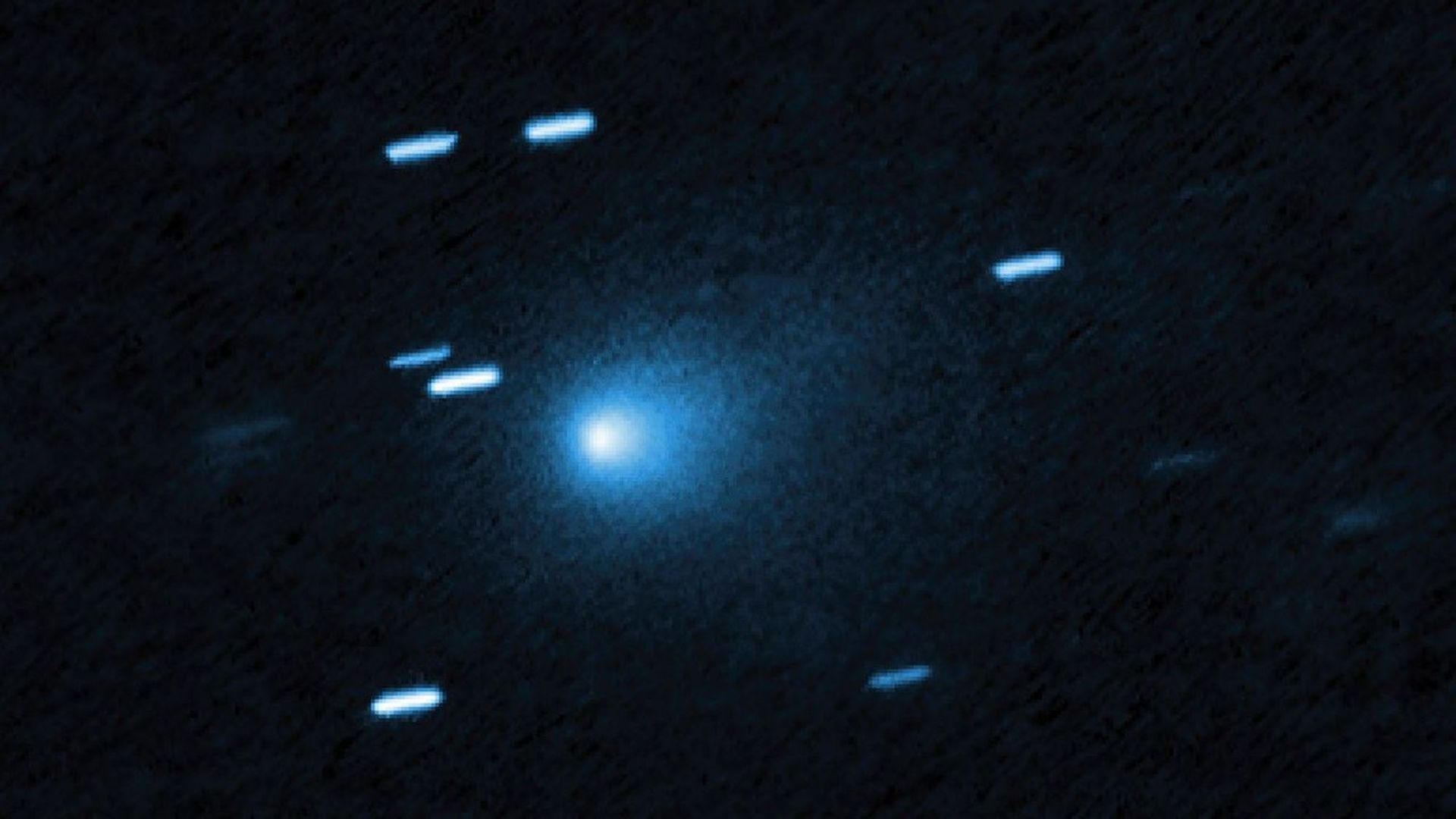
Scientists utilized the James Webb Space Telescope (JWST) to gain new insights into the origins of the interstellar comet 3I/ATLAS. This comet, which entered our solar system in 2025, was found to have a composition distinct from typical comets within our solar system. Instead, its ice grains, composed of tiny particles of ice mixed with dust, share similarities with certain objects at the edge of our solar system, known as trans-Neptunian objects (TNOs).
Discovered entering the solar system in the summer of 2025, 3I/ATLAS is the third known object to do so from interstellar space, following 1I/Oumuamua in 2017 and 2I/Borisov in 2019.
The JWST's primary mission was to observe 3I/ATLAS, which provided an unprecedented opportunity to study the conditions under which such bodies form in other star systems. The comet's origin remains unclear, but scientists believe it was formed within a planet-forming disk of gas and dust around a young star, possibly as early as 10 to 12 billion years ago. This star likely ejected 3I/ATLAS, which subsequently wandered interstellar space before entering our solar system.
Like comets within our solar system, 3I/ATLAS consists of ice grains less than a micron in size. When warmed by the sun, these grains sublimate, releasing gas and forming a coma and tail that JWST can detect. Spectroscopic analysis of the comet's composition revealed a strong three-micron absorption line, indicative of water-ice, but the weaker absorption lines at 1.5 and two microns suggested the presence of dust mixed within the ice.
This composition differs from that of comets native to our solar system, whose icy grains are generally cleaner and purer.
Written by urgent.news from Space.com's reporting — not their text. Machine-written — may contain errors; check the original before relying on it.
Also reported by 1 other outlet
- Vaonis unveils Atlas, the world's 1st modular smart telescope system r.smartbrief.com