Buried for 2,600 years beneath Nile mud, a massive ancient Egyptian complex was just found — from space
Satellite radar and underground electrical scans have revealed a 2,600-year-old structure at Buto, one of ancient Egypt's most sacred cities. The real surprise wasn't the walls — but what was underneath them.
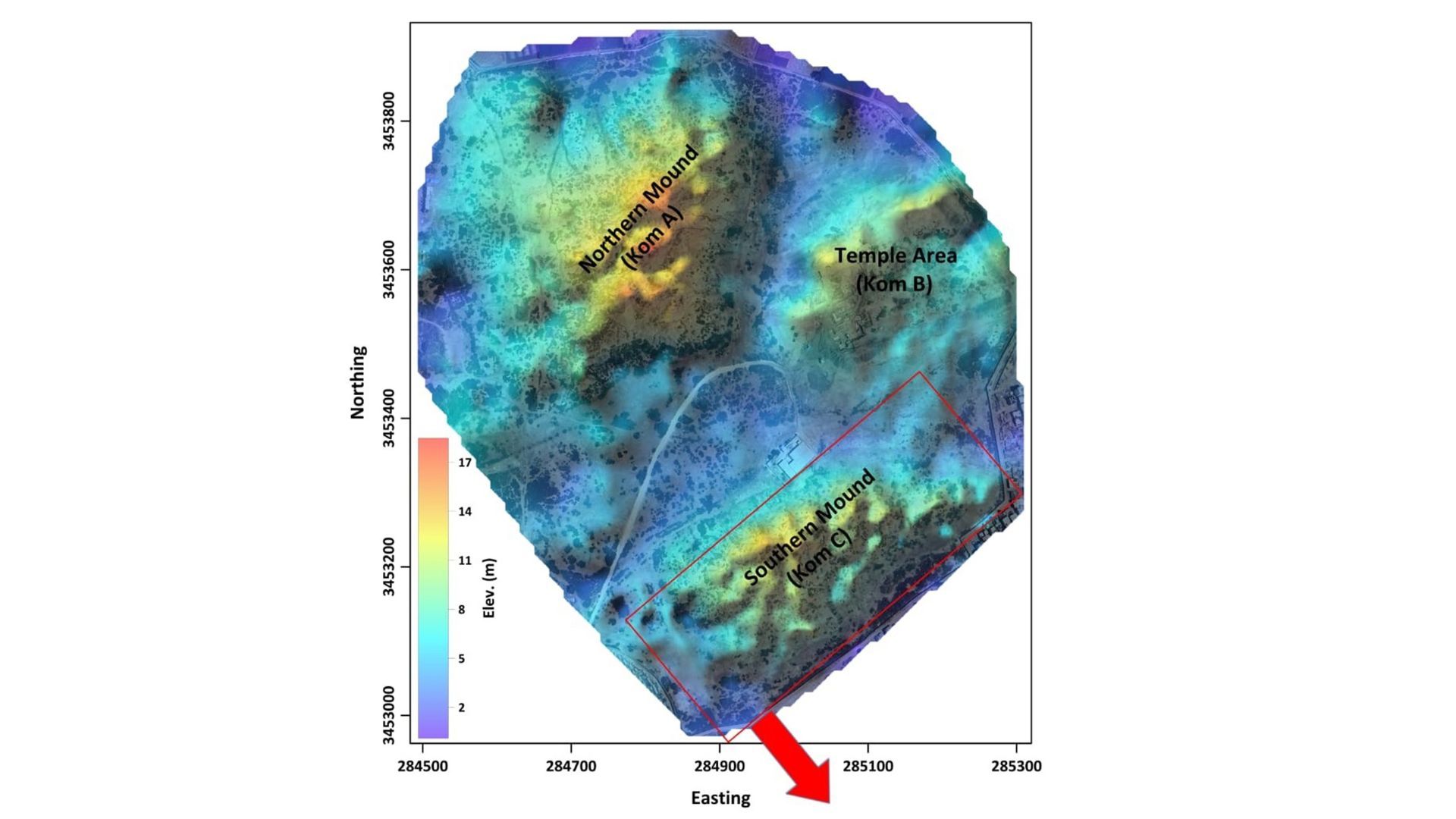
A previously unknown ancient Egyptian complex, hidden beneath the Nile Delta for over 2,600 years, has been discovered using cutting-edge satellite technology. The site, known as Buto, is located in the northwestern Nile Delta and was once the sacred home of Wadjet, the cobra goddess of Lower Egypt. Archaeologists have long been excavating the upper layers of the site, which date back to the Macedonian Ptolemaic dynasty (305 to 30 B.C.) and the Roman era (30 B.C. to A.D.
395). However, the deeper, older layers, including a mound called Kom C, had remained inaccessible due to their waterlogged clay foundation.
Researchers turned to noninvasive tools, including satellite imagery and electrical resistivity tomography (ERT), to investigate the mysterious subterranean layers. They first analyzed radar images from the European Space Agency's Sentinel-1 satellite, which revealed a large oval-shaped anomaly buried beneath Kom C, measuring 420 feet long and 203 feet wide (128 by 62 meters).
To further explore the site without causing damage, they conducted 15 parallel lines of ERT, revealing a layered underground landscape that included scattered Ptolemaic and Roman debris, a 26th dynasty (688 to 525 B.C.) mudbrick structure, and a thick, clean layer of sand.
The Saite builders, who constructed the large structure in the 26th dynasty, strategically placed a cushion of clean sand beneath the mudbrick walls. This sand layer not only stabilized the foundations but also allowed groundwater to drain through, preventing the clay from swelling and shifting. By combining satellite radar with deep ERT profiles, the researchers were able to map the walls of the massive Saite-era structure and analyze the subsurface layers, providing new insights into the site's construction techniques and religious significance.
The discovery of ushabti figurines, a limestone altar with dried residues, and a rare faience baboon figurine, associated with the god Thoth, further highlights the site's sacred function.
Written by urgent.news from Live Science's reporting — not their text. Machine-written — may contain errors; check the original before relying on it.