I added Piper to Home Assistant for local AI voice control, but it turned out to be even more useful
This TTS engine can do more than just voicing my local AI pipeline
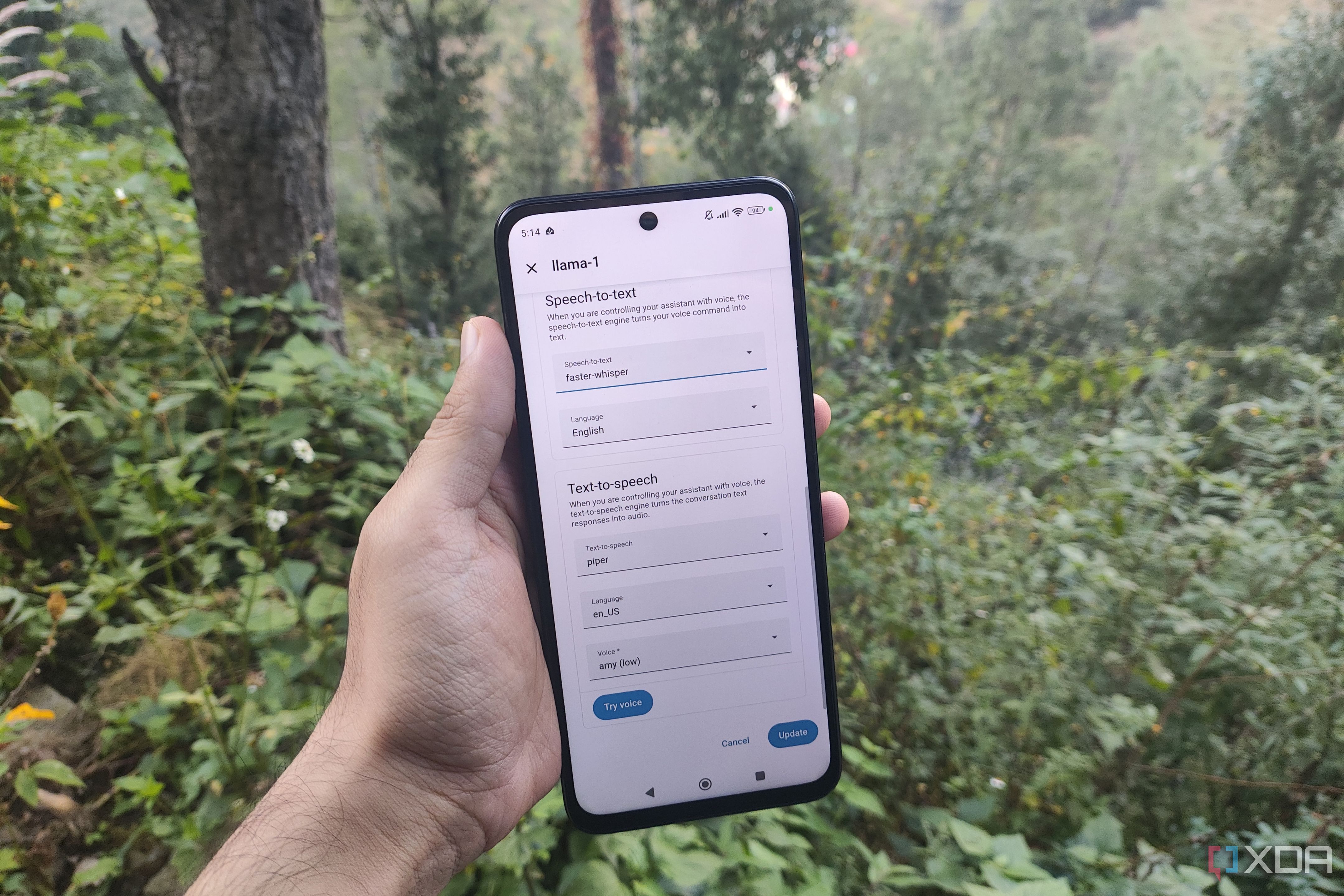
Since discovering the integration of locally-hosted large language models with Home Assistant, I've developed various innovative setups to extend my smart home's capabilities. Initially, I paired my smart home hub with Ollama to operate conversational language models, but later switched to llama.cpp after further exploration. Additionally, I combined Frigate and HASS servers with the AI Summary Blueprint to enable my vision-equipped local AI models to create concise summaries of security footage triggered by object detection.
Among my favorite tools is Piper, which has transformed static alerts from my Home Assistant smart home into articulate voice notifications. Earlier this year, the Open Home Foundation introduced voice satellite functionality to Home Assistant's Android companion app, which inspired me to revise my setup. Previously, I needed elaborate configurations to detect wake words and initiate AI-driven responses.
However, the voice satellite feature empowered my old smartphone to process the wake word independently, linking it to my LLM running on llama.cpp. Though Home Assistant lacks native llama.cpp compatibility, I utilized the Home Agent integration from HACS (now incorporated into the Marketplace in the latest beta) to link my Gemma-4-E4B (Q4_K_M) model to the smart home platform.
Even though my local LLM handles inference and my phone manages wake word detection, Piper and Whisper apps are essential for processing voice inputs and delivering real-time responses. Whisper captures audio, converts it to text, and sends it to Home Assistant, which then forwards the response to Piper for speech synthesis. The best part is that both Piper and Whisper are lightweight and can run on most machines; I've deployed Piper as an LXContainer to leverage my GPU, but the apps are also available for direct installation on the Home Assistant server.
Apart from its primary function, Piper also handles reading out notifications from my Home Assistant hub to speakers in my home lab. I've created automation rules in the Home Assistant Settings menu, using YAML to configure Piper to convert text-based persistent notifications into voice alerts. What I appreciate most about Home Assistant is the abundance of customizable features and services, from turning Android devices into smart control panels to leveraging Node-RED for advanced multi-device automation.
Written by urgent.news from XDA Developers's reporting — not their text. Machine-written — may contain errors; check the original before relying on it.