Singapore turns up heat on power-hungry air conditioning with cool revolution
Long dubbed an “air-conditioned nation”, Singapore is experimenting with cooling alternatives from chilled beams to “passive displacement” to curb its thirst for energy-guzzling air conditioning. The city state has the highest per-capita air conditioner ownership rate in Southeast Asia, with about 99 per cent of private residences equipped with cooling units. Singapore’s local building sector…
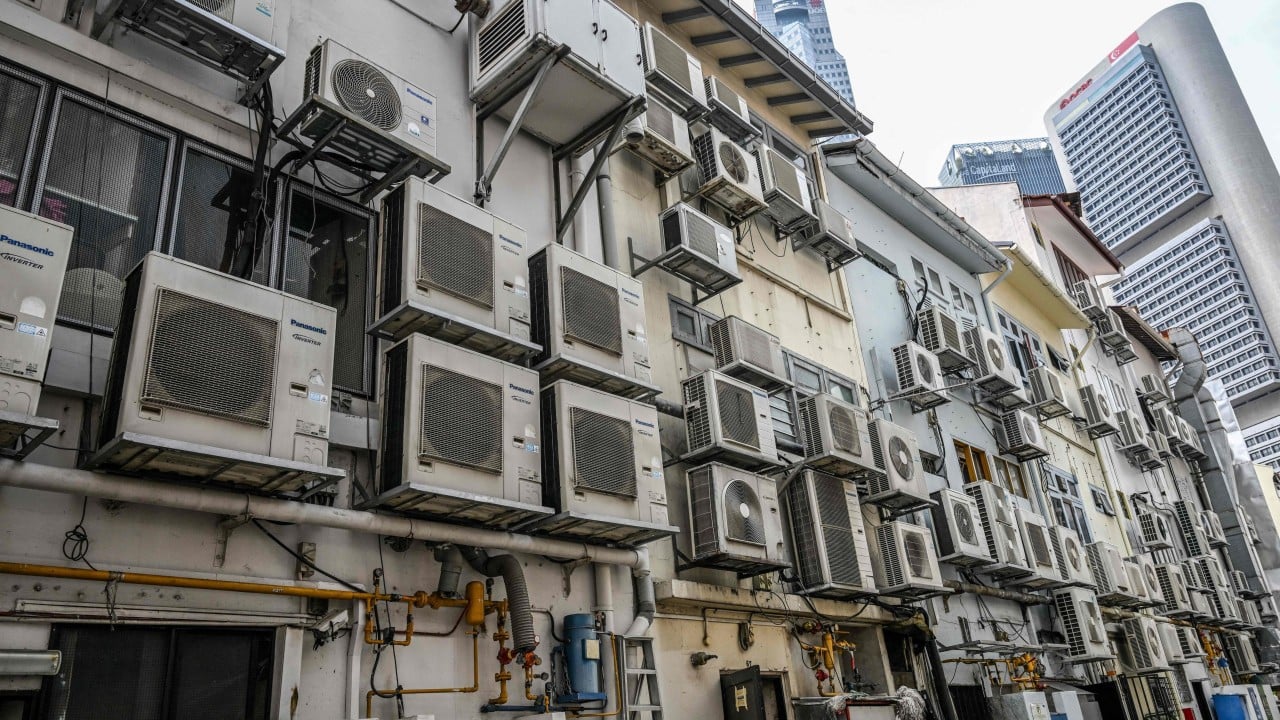
Singapore, known as the "air-conditioned nation," is exploring innovative cooling methods to reduce its energy consumption and carbon emissions. The city state has the highest per-capita air conditioner ownership rate in Southeast Asia, with almost all private residences equipped with cooling units. Buildings account for one-fifth of Singapore's emissions, and air conditioning consumes 40 to 60 percent of a building's energy.
Various cooling alternatives are being tested, including active chilled beams, passive displacement cooling, and radiant cooling. Active chilled beams use perforated panels with cooling coils, mounted on ceilings, to cool air through a low-pressure zone created by jets of air. Passive displacement cooling utilizes natural airflow to reduce the reliance on mechanical fans, while radiant cooling cools air by passing water chilled to between 14 degrees and 18 degrees through pipes or panels.
These alternative cooling systems have shown significant energy savings, with active chilled beams cutting energy use by over 30 percent compared to conventional air conditioning. The government supports these innovations, recognizing their potential to save up to 48 percent in energy and help Singapore achieve net-zero carbon emissions by 2050. While alternative cooling methods cost more to install, they offer lower running costs over time due to substantial energy savings.
However, the shift towards alternative cooling methods faces challenges, as users are accustomed to traditional air conditioning systems. Supporters argue that the mindset shift is necessary, and demand for cooling continues to rise with rising temperatures and humidity. Cooling tech experts suggest that future technologies should incorporate more sophisticated controls, such as predictive systems that adjust temperatures before rooms become too hot or cold.
Written by urgent.news from South China Morning Post's reporting — not their text. Machine-written — may contain errors; check the original before relying on it.
This story
This is one outlet's version. Read the fullest account.
- Singapore loves its air-con, now it’s finding ways to stay cool without it malaymail.com
- ‘Air-con nation’ Singapore eyes alternatives to cool down freemalaysiatoday.com
- 'Air-con nation' Singapore eyes alternatives to cool down nst.com.my
- ‘Air-con nation’ Singapore eyes alternatives to cool down japantimes.co.jp