Seoul stocks open lower on Wall Street losses, AI concerns
SEOUL, Oct. 30 (Yonhap) -- South Korean stocks opened lower Friday, tracking ove...
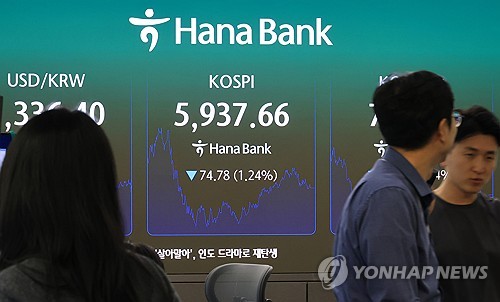
On Friday, South Korean stocks opened lower as they mirrored declines on Wall Street, with renewed doubts surrounding the long-term viability of the artificial intelligence (AI) boom casting a shadow over investor confidence. The key Korea Composite Stock Price Index (KOSPI) fell 177.31 points, or 2.99 percent, to reach 5,760.35 at the market's opening. The index had shed 1.24 percent in the prior session due to profit-taking in major chip manufacturers, even though Samsung Electronics reported record quarterly earnings.
Wall Street experienced a sell-off on the eve of trading, with technology shares taking the brunt of the downturn. Alphabet, the parent company of Google, saw its stock plummet more than 12 percent after reporting a 25 percent year-on-year increase in revenue to $127.58 billion for the third quarter. Despite this robust financial performance, the company's results fell short of market expectations, sparking concerns about the returns generated from hefty investments in AI technology.
The tech-heavy Nasdaq Composite Index lost 1.38 percent, while the Philadelphia Semiconductor Index fell 1.4 percent, further dampening confidence in South Korean chipmakers.
Written by urgent.news from Yonhap News's reporting — not their text. Machine-written — may contain errors; check the original before relying on it.
This story
This is one outlet's version. Read the fullest account.
- Wall Street ends lower as Alphabet revenue miss revives AI capex jitters businesstimes.com.sg
- Wall Street's AI bet: Own the infrastructure, collect the rent channelnewsasia.com
- Wall Street ends lower as Alphabet revenue miss revives AI capex jitters straitstimes.com
- (LEAD) Seoul stocks open lower on Wall Street losses, AI concerns en.yna.co.kr
- Seoul stocks open lower on Wall Street losses, AI concerns koreatimes.co.kr
- How surging demand from AI hyperscalers has quintupled flash memory prices and shifted market and negotiating power from Apple to suppliers like Kioxia (Rolfe Winkler/Wall Street Journal) wsj.com