SK Hynix says memory shortages to persist until 2030
Good for its bottom line, not great news for yours, or for the PC and smartphone markets
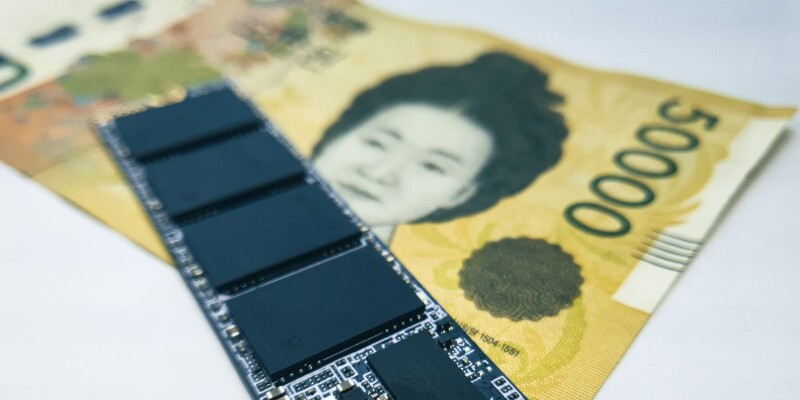
Memory specialist SK Hynix has expressed concerns that shortages of memory products will continue until at least 2030, which they believe will help the company to achieve unprecedented revenue and profit growth. During a presentation on its quarterly results, the company highlighted the belief that a positive feedback loop exists between AI-driven productivity gains, new revenue streams in software development, customer service, and search, and increased AI adoption, which in turn drives further investment in infrastructure.
This, in turn, leads to more buyers entering the AI infrastructure market, including general enterprises and nations constructing sovereign infrastructure. Looking ahead, SK Hynix anticipates even higher demand for memory, driven by autonomous cars and the expanding robotics market.
The company acknowledged that its supply cannot keep pace with market growth due to the technical complexity of leading-edge manufacturing processes and the lengthy lead time required to construct new production facilities. SK Hynix expects the disparity between demand and supply to persist through 2030. However, the company has secured 14 long-term contracts with major clients, accounting for more than half of its total output during 2027 and 2028.
These contracts include a mechanism that adjusts for market conditions within agreed-upon price ranges, providing stable profitability while allowing the company to respond flexibly to market changes.
SK Hynix reported a remarkable quarter, with revenue soaring by 328 percent year-over-year and 32 percent quarter-over-quarter, reaching ₩104.6 trillion ($78.1 billion). Operating profit also increased dramatically, up 486 percent year-over-year, to ₩87.68 trillion ($62.8 billion). Looking forward, the company plans to expand its production capacity and focus on high-margin products, which it anticipates will further boost revenue and profits in the coming year.
However, CFO Kim Woo-hyun warned that shipment volumes for PCs and mobile devices could decrease due to increased costs resulting from higher memory prices and supply shortages.
The company also shared its future plans, which include increasing the production of HBM4, which it believes will surpass HBM3E in both shipment volumes and revenue in the fourth quarter, and becoming a mainstream product. SK Hynix is aggressively expanding its 10nm-class 6th generation (1c) process technology and aims to increase the sales of DDR5 and LPDDR5 SOCAMM for AI servers.
Additionally, the company is developing NAND technology to become a core solution that improves the throughput and economic efficiency of AI services, based on HBF and system optimization technologies.
Investors reacted positively to SK Hynix's optimistic outlook, with the company's share price rising by approximately three percent in after-hours trading, indicative of confidence in the AI boom's durability.
Written by urgent.news from The Register's reporting — not their text. Machine-written — may contain errors; check the original before relying on it.
This story
This is one outlet's version. Read the fullest account.