A Thai rescue center gives injured leopard cat cubs a second chance
At a government wildlife rescue center in Thailand, dozens of lost and injured baby leopard cats are receiving a second chance at life in the wild. Annual admission of leopard cats (Prionailurus bengalensis) at the Department of National Parks, Wildlife and Plant Conservation rescue center in Khon Kaen, in northeastern Thailand, have surged from an […]
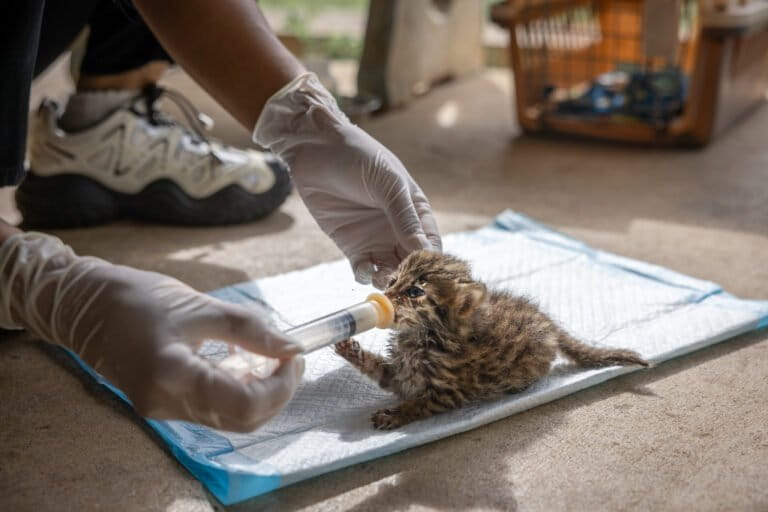
In a government wildlife rescue center in Thailand, dozens of injured baby leopard cat cubs are being given a second chance at life in the wild. The number of these vulnerable kittens admitted to the rescue center in Khon Kaen, northeastern Thailand, has surged from an average of about 10 cats per year prior to 2023 to as many as 65 in recent years.
This increase is attributed to worsening habitat fragmentation, agricultural burning in sugarcane fields, and heightened public usage of a government wildlife hotline, according to contributor Ana Norman Bermudez for Mongabay.
Between January and August of this year, the facility admitted over 60 kittens, more than half of them rescued from charred fields with burn injuries. The center's staff prioritize stabilizing the new arrivals by addressing burns, infections, and nutritional deficiencies before moving them to specialized 24-square-meter (258-square-foot) rehabilitation enclosures. Mortality rates at the facility have improved significantly, dropping to around 33% in 2023 from 60% in previous years, as reported by center officials.
Warisara Thomas, a researcher and veterinarian at the center, noted that many of the cubs that did not survive were initially brought by well-meaning people who attempted to care for them at home. This practice is illegal and deprives the cubs of the specialized care they require while exposing them to domestic animals that can transmit diseases.
Before integrating the cubs into behavioral rehabilitation, veterinarians conduct thorough health checks, testing the animals for feline immunodeficiency virus, parvovirus, and canine diseases.
Written by urgent.news from Mongabay's reporting — not their text. Machine-written — may contain errors; check the original before relying on it.