USA: Gesetze, Klagen, Steuervorteil – so streitet Amerika über Trinkgeld
Roboter-Barista erbitten Trinkgeld, New York zwingt Liefer-Apps zur Abfrage. Der freiwillige Dank wird in Amerika zur Machtfrage und beschäftigt Gerichte – mit Signalwirkung für Deutschland.
In New York City, the concept of tipping at restaurants is being challenged by new laws requiring customers to specify their tip amount. The Monkey Cup, a café north of Central Park, does not offer free Wi-Fi and instead encourages patrons to read books and tip with their attention. The café's baristas handcraft latte art and charge a premium for their work.
Tipping in America has long been a social norm, but is now facing political pressure. New York City recently passed a law requiring ride-sharing apps Uber and Doordash to ask customers about tipping when paying. President Donald Trump previously gave tax breaks to tipping service providers. However, consumer pressure is increasing, with people feeling overwhelmed by constant requests for tipping.
Michael Lynn, a consumer researcher at Cornell University, has published numerous studies on tipping. He says that while the push for tipping has not changed norms, it has worn people down. He adds that tipping may only occur when a large enough percentage of people tip, otherwise those who don't are seen as outliers.
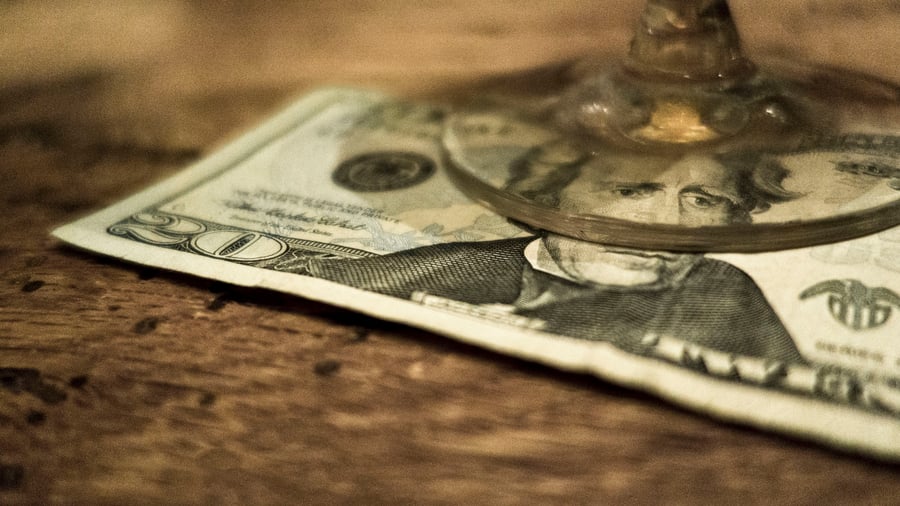
In many American restaurants, customers pay with credit cards and rarely carry cash. This makes it difficult to give tips, and therefore in many places, a touchscreen is used instead of a glass to ask for tips. Lynn argues in his book "The Psychology of Tipping" that the screen makes people feel they are seeing the majority giving, when in reality, most likely aren't.
Tipping is becoming less generous. According to data from the US Census Bureau, while more employees are receiving tips since the pandemic, customers are not being more generous. More than a quarter of customers say they never tip in take-out orders, and only a tenth tip more than requested. So, tipping is becoming more widespread, but not higher.
Even with automation, restaurants require physical tip jars. In some places, customers are still asked for tips, while others have eliminated them entirely. The demise of Jarvis, a robotic barista at the Chelsea Market, was due to customer feedback and the company's decision to raise wages for employees to $16.50 per hour. Physical tip jars have been reinstated in these locations, as there are still real people working behind the scenes.
Written by urgent.news from Handelsblatt's reporting — not their text. Machine-written — may contain errors; check the original before relying on it.
This story
This is one outlet's version. Read the fullest account.
- USA: Laws, lawsuits, tax benefits – America argues about tips handelsblatt.com