Volunteers help save one of London's rarest plants
Tower mustard has suffered steep decline in London but has been successfully grown and replanted.
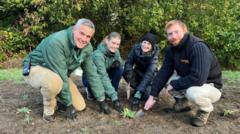
Over 1,000 tower mustard plants have been cultivated and reintroduced in London by volunteers, marking the inaugural year of a community-driven initiative to revive one of the city's rarest native wildflowers. The ambitious project, spearheaded by Citizen Zoo and Habitats & Heritage, unites land managers, community groups, conservation partners, and volunteers to restore habitats where tower mustard once thrived.
Volunteers, known as the Mighty Mustard, attended a workshop to learn about seed sowing techniques and received their own growing supplies. Seeds were collected from Lesnes Abbey Woods and Stain Hill Reservoir, two of the last remaining habitats for the plant. Charlotte Harris, nature conservation manager at Habitats & Heritage, expressed her enthusiasm for engaging locals in conservation efforts, noting that volunteers have formed a strong attachment to the plants.
The seeds have been planted at various sites, including Wimbledon Common, Hounslow Heath, Lesnes Abbey Woods, and Barnes Common. Harris hopes that this model can be replicated to protect other rare plants in the future. Dr. Mark Spencer, a botanist, has provided expert guidance throughout the project. Tower mustard, also known as Turritis glabra, is a native UK herb facing decline due to habitat loss and changing land management practices.
It is classified as near threatened on the Great Britain Red List and endangered in England, growing up to one meter tall and supporting pollinators with its delicate white flowers.
This volunteer-led approach builds on Citizen Zoo's successful Hop of Hope project, which involved raising and releasing large marsh grasshoppers in Norfolk. Elliot Newton, director of rewilding at Citizen Zoo, expressed optimism about expanding more plant preservation projects in the face of climate change. In London, the city has lost 185 plant species recently.
Newton mentioned other plants on Citizen Zoo's radar, such as copse bindweed, and emphasized that the tower mustard project is funded by the Greater London Authority's Green Roots Fund and Thames Water. The project collaborates with various organizations, including Habitats & Heritage, Barnes Common, Lesnes Abbey Woods, Wimbledon Common, London Boroughs of Hounslow and Richmond upon Thames, and Historic Royal Palaces. Newton concluded by stating that these small projects contribute to safeguarding the city's future.
Written by urgent.news from BBC Science's reporting — not their text. Machine-written — may contain errors; check the original before relying on it.