Madeira’s marine reserves offer hope for ocean conservation, scientists say
LISBON, Oct 19 — Juan Mayorga smiled as a stingray glided across his computer screen, moving gracefully over the s...
LISBON, Oct 19 — Colombian environmental engineer Juan Mayorga expressed delight as a stingray swam gracefully on his computer screen, near Portugal’s Desertas Islands in Madeira’s archipelago. Mayorga, 36, works for Pristine Seas, a National Geographic Society initiative, and emphasized the significance of marine protection. "As we protect the place, year after year, fish get bigger and bigger and bigger, produce more and more babies, and that is protection working right there," he stated.
Around 200 scientists, including Mayorga, joined a month-long expedition in October to examine Madeira's marine environment. Their focus includes studying the health of ecosystems and assessing their resilience to climate change. Mayorga is analyzing underwater video footage of fish at depths of 40 to 50 meters, obtained using cameras baited to attract marine life.
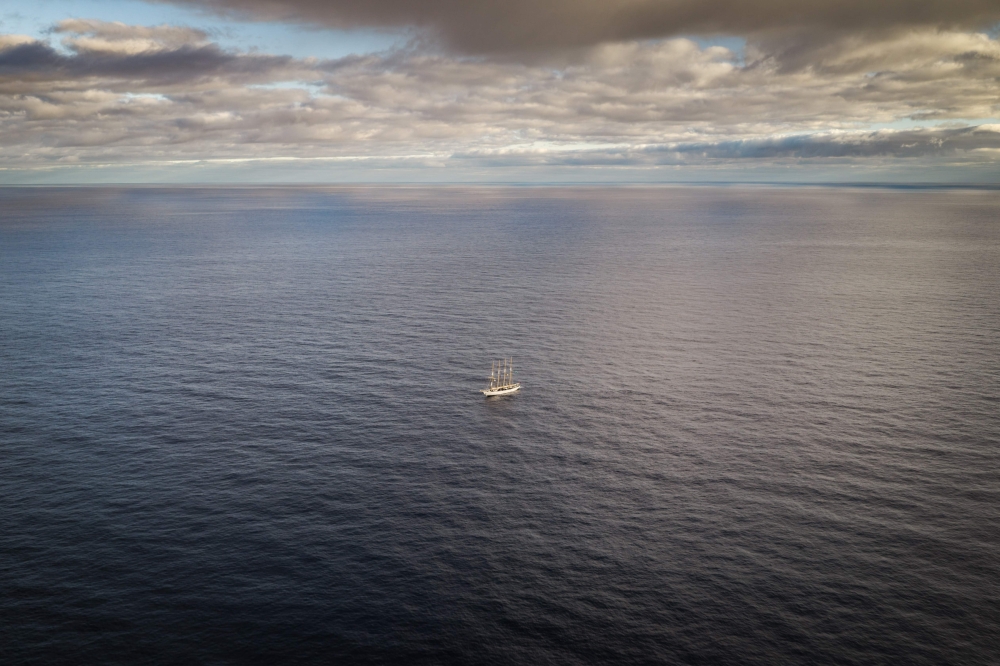
The expedition's flagship is the 70-meter sailing ship Santa Maria Manuela, which brought researchers to the uninhabited Desertas Islands, a group of three rocky islets about 40 kilometers southeast of Madeira. On the largest island, researchers attach temperature sensors to rocks exposed at low tide to understand how crustaceans and sponges fare in different sunlight conditions.
Meanwhile, a marine biologist collects environmental DNA samples from the water, enabling the detection of fish species even when they are not visible to cameras.
Madeira's marine conservation efforts date back to 1971 when authorities established a reserve around the Selvagens Islands to protect Cory’s shearwaters. In 2022, the reserve expanded to cover about 2,600 square kilometers, becoming the largest protected marine area in the North Atlantic. Another reserve around the Desertas Islands, established in the early 1990s, helped a Mediterranean monk seal colony grow from just eight animals to 31.
Paulo Oliveira, coordinator of the Madeira Ocean conservation program, emphasized the crucial role of well-conserved oceans in combating climate change.
Written by urgent.news from Malay Mail's reporting — not their text. Machine-written — may contain errors; check the original before relying on it.