Rosana Paulino Reads the Archive Against Those Who Made It
“This history is dirty,” says the Brazilian artist, who sees the colonial past as an active force in her country’s present.
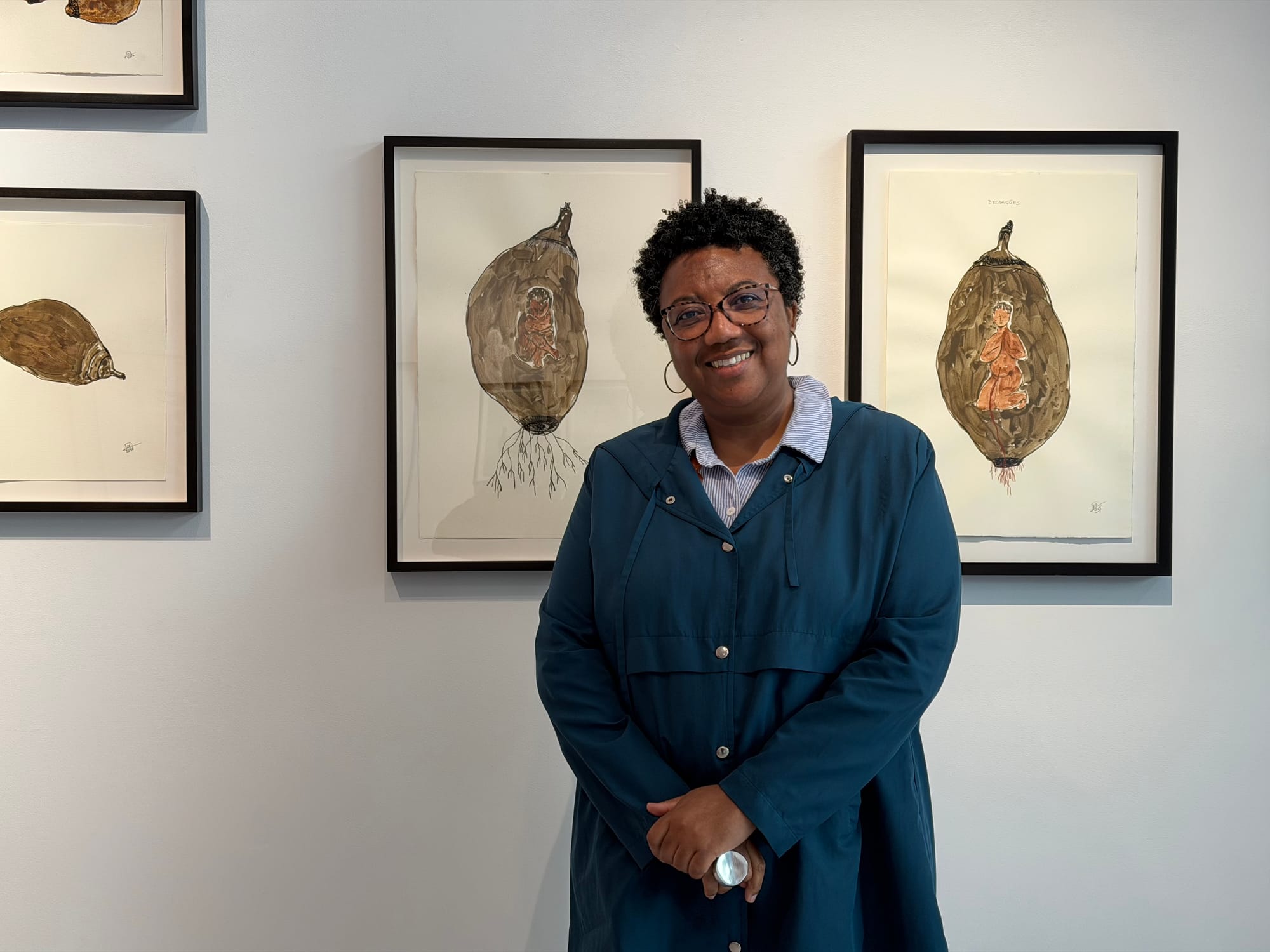
On October 5, following a contentious first round of Brazil's presidential election, artist Rosana Paulino gathered in the New School's Gallery. Hanging nearby was a collection of her natural-pigment drawings of small figures within seeds, many serving as studies but only a couple as completed works. She is known for her perfectionism, often discarding pieces that don't meet her standards.
Paulino, the first Afro-Brazilian woman to receive a PhD in visual arts in Brazil, uses her work to highlight the ongoing impact of the country's colonial past. Currently, her solo exhibition ¿História Natural? is being shown until November 1, organized by the Vera List Center for Art and Politics. This exhibition centers on her 2016 artist's book of the same name, which won the 2025–27 Jane Lombard Prize for Art and Social Justice and a $25,000 award.
The book juxtaposes linocut and drypoint with altered photographs from the Harvard naturalist Louis Agassiz's 1865–66 expedition to Brazil. Paulino's work critiques the colonial representation of Brazil, particularly focusing on the violence against Black people, often women. Her exhibition title, ¿História Natural?, references the 2016 artist's book that earned her the prestigious Jane Lombard Prize.
The book, which includes pages of linocut and drypoint alongside collaged and stitched altered photographs, aims to challenge the colonial narrative. Paulino's work is a call to critically examine Brazil's history and representation, drawing on the very format used by European colonizers to depict and define the country.
Written by urgent.news from Hyperallergic's reporting — not their text. Machine-written — may contain errors; check the original before relying on it.