NASA Improves Shock, Vibration Analysis
Rockets vibrate, shake, and flex intensely as they climb into space, and spacecraft packed with delicate scientific instruments must survive those forces. Before any rocket leaves the ground, NASA engineers work to predict how those stresses will affect every part of a spacecraft. To do that, engineers in the Dynamic Environments Group with NASA’s Launch […]
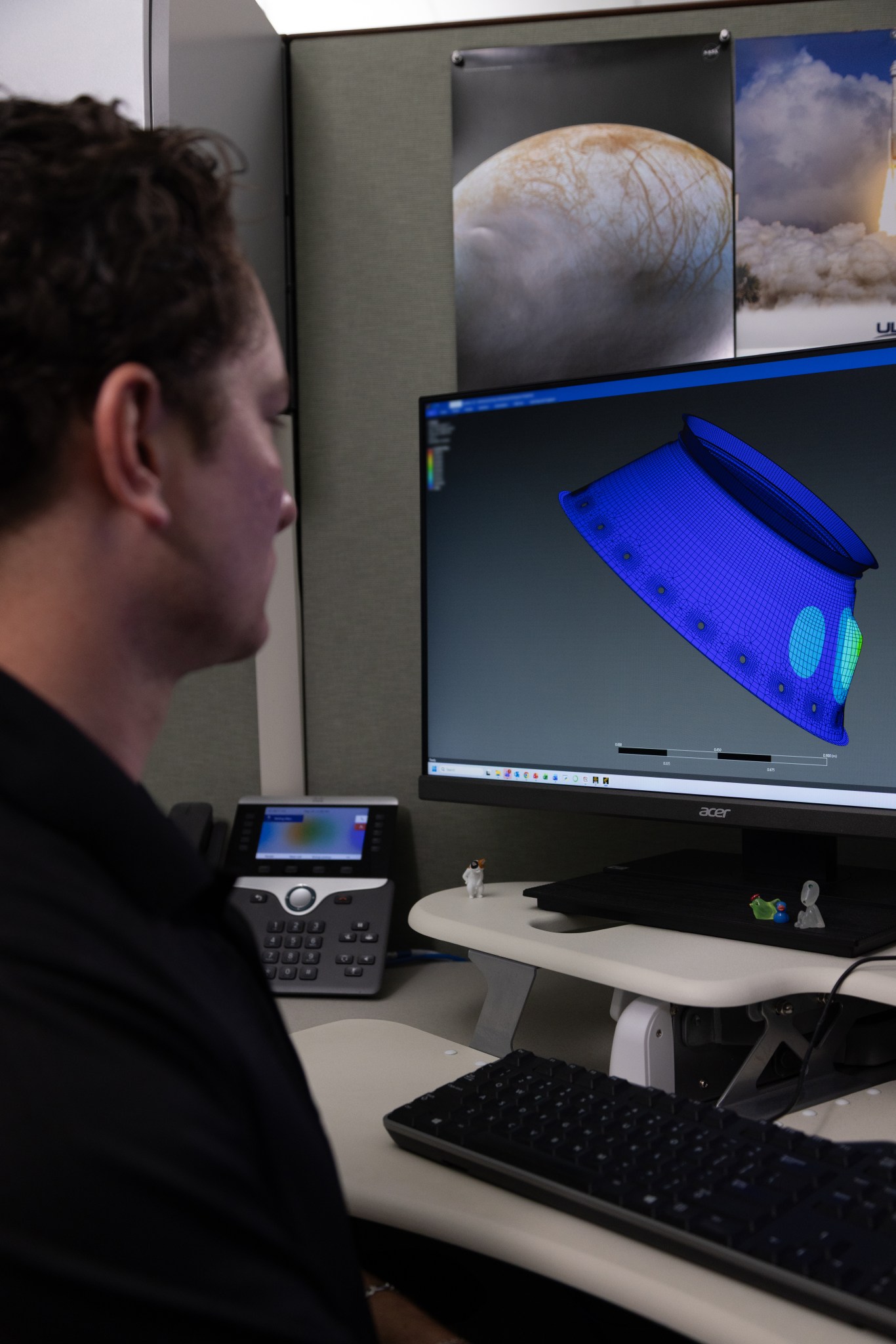
Stirling Allen, a member of NASA's Dynamic Environments Group at the agency's Kennedy Space Center, demonstrated a commercial digital software application at the center. The software employs finite element modeling to conduct shock and vibration analysis, ensuring spacecraft and rockets can endure the intense vibrations, shocks, and stresses experienced during launch and ascent.
By employing this software, NASA engineers can predict the behavior of spacecraft and rockets under extreme conditions, identify potential weak points, and address risks early in the development process. This approach strengthens mission safety and enhances the longevity of spacecraft components.
Traditionally, engineers at NASA have relied on rules of thumb and scaling previous data to estimate shock and vibration environments. However, the process often relied heavily on engineering judgment and approximations from past missions. The introduction of the software simplifies the modeling workflow for finite element analysis, providing a standardized template that guides engineers more efficiently through vibration profiles and shock conditions.
By utilizing this software, engineers can quickly and accurately simulate complex structures, breaking them down into smaller components to predict how spacecraft or rockets might respond to specific forces.
The new software has already proven valuable, enabling NASA to verify a commercial launch provider's rocket for a NASA mission more efficiently. The team used the software to determine that shock testing was necessary, even when the provider had only conducted vibration testing. By creating a template and running what-if comparisons, the engineers visualized structural behavior and addressed complex questions that would have required extensive manual modeling.
The analysis provided new insights into shock during transport, enhancing mission safety and preparedness.
This software represents a significant improvement in shock and vibration analysis for NASA. By streamlining the modeling process and providing a standardized template, the tool saves time, reduces manual effort, and enhances engineers' proficiency with advanced modeling techniques. The software's ability to visualize non-intuitive dynamics problems and highlight potential risks early in the development process contributes to a more proactive and efficient approach to mission planning and spacecraft design.
Written by urgent.news from NASA's reporting — not their text. Machine-written — may contain errors; check the original before relying on it.
This story
This is one outlet's version. Read the fullest account.