Konjunktur: Chinas Wirtschaft wächst etwas schneller – Probleme bleiben
Die chinesische Wirtschaft wächst etwas stärker als erwartet. Die neuen Zahlen zeigen aber auch, wie ungleich sich das Land entwickelt.
China's economy experienced a modest acceleration in the summer, yet the domestic issues remain substantial, as reported by the country's statistics agency. The nation's GDP expanded by 4.5 percent year-on-year in the third quarter, slightly higher than economists anticipated. The growth rate had been 4.3 percent in the second quarter and 5.0 percent at the beginning of the year.
For the first nine months, China reported an economic growth of 4.6 percent, keeping it within its annual target of 4.5 to 5 percent. Mao Shengyong, a spokesperson for the statistics agency, expressed confidence that China would meet its yearly goal, citing favorable conditions. He anticipated an improvement in the final quarter, following a slowdown in the second quarter attributed to oil price developments due to the situation in the Middle East.
However, China's economy continues to develop unevenly, with foreign trade booming, particularly exports of technology products such as semiconductors and artificial intelligence equipment, which increased by 21.3 percent in the first nine months compared to the previous year. This surge in exports, totaling around 938 billion US dollars (834 billion euros) more than imports from January to September, has generated growing tensions with key trading partners, especially in Europe.
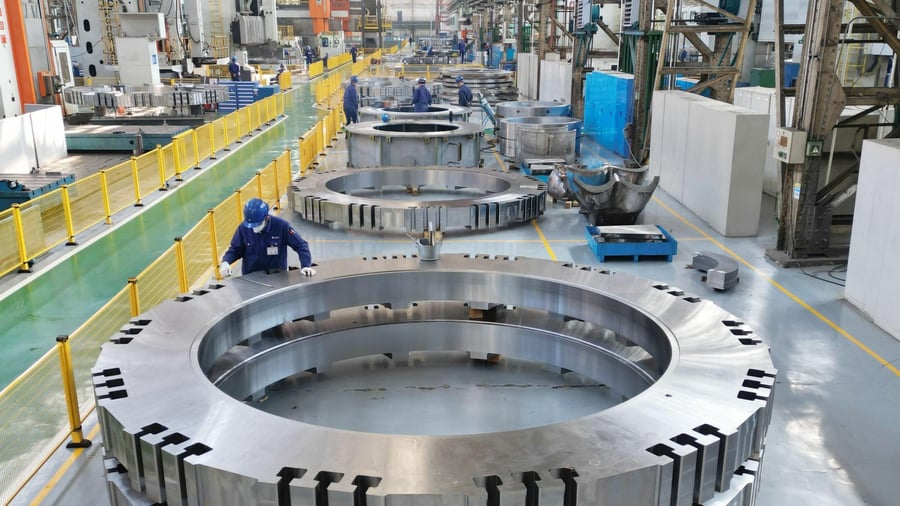
Concerns are mounting over Chinese products posing a competitive challenge to local manufacturers. The industrial sector remains a crucial support for the economy, with industrial production growth rising by 5.5 percent year-on-year in September, up from 5.2 percent in August. However, the real estate crisis continues to worsen domestically.
While retail sales grew by 1.1 percent year-on-year in September, surpassing expectations, consumer spending remains weak, with many consumers hesitant to make significant purchases. Investment, in particular, shows a more pronounced weakness, with overall investment falling by 7.2 percent year-on-year from January to September.
The ongoing real estate crisis exacerbates the situation, with investment in real estate development declining by 20.6 percent in the first nine months. The housing crisis impacts the economy in multiple ways. Many homes are losing value, causing concern among owners who are now spending less. Construction companies are launching fewer new projects and awarding fewer contracts to builders.
Simultaneously, many cities are short of funds. They have earned considerable revenue from issuing land to construction firms during the boom years, but this income has plummeted since the real estate crisis hit. Beijing is attempting to counteract these effects through additional aid measures, providing interest subsidies under certain conditions for new home loans since October.
The International Monetary Fund (IMF) recently lowered its growth expectations for China, forecasting a 4.5 percent increase this year and only 4.0 percent for 2027. The fund warns of the consequences of weak domestic demand and urges stronger support for consumption, as long-term challenges may arise for China in balancing its economic problems with increasing reliance on exports.
Written by urgent.news from Handelsblatt's reporting — not their text. Machine-written — may contain errors; check the original before relying on it.
Also reported by 1 other outlet
- Economy: China's economy growing slightly faster - problems remain handelsblatt.com