Trump just renamed AI. He’s telling us what’s coming next
Washington now calls it super intelligence, not artificial intelligence. If the name proves accurate, our schools, our jobs and even our homes will be unrecognisable.
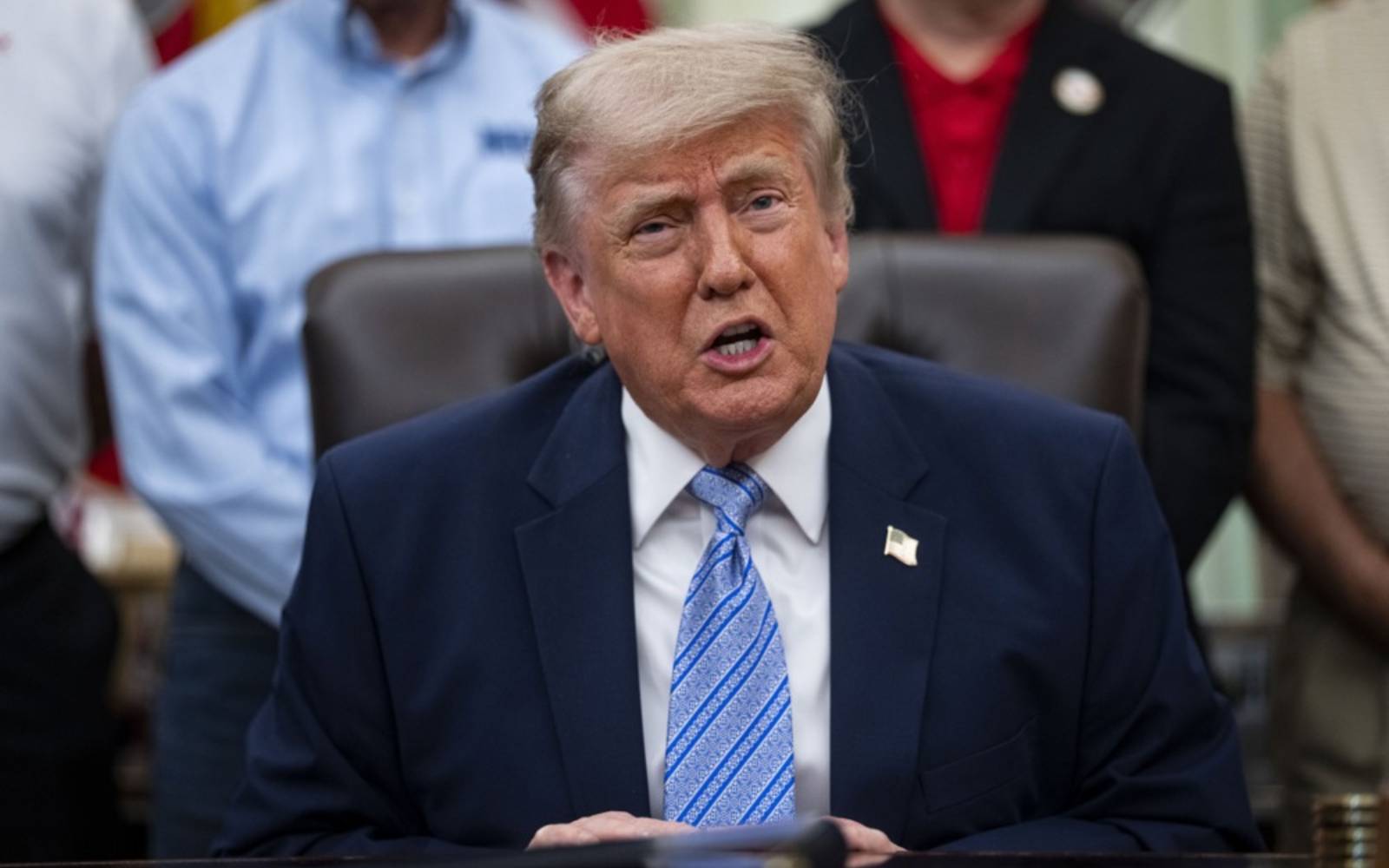
In a recent address at the United Nations General Assembly on September 22, 2025, former US President Donald Trump announced that all United States documents, and hopefully the world's, will henceforth use the term "super" instead of "artificial" to describe artificial intelligence (AI). The following week, he signed an executive order entitled "Inaugurating the Era of Super Intelligence," instructing federal agencies to replace "artificial intelligence" and "AI" with "super intelligence" (SI) and "super" across all official documents and websites.
Simultaneously, executives from major AI companies such as Meta, Nvidia, Google, OpenAI, xAI, and Anthropic signed a separate, voluntary White House Accord on Super Intelligence. Although Trump's explanation for this change was that "artificial" makes intelligence sound fake, the term "superintelligence" was popularized by philosopher Nick Bostrom in his 2014 book, "Superintelligence," which describes a machine that vastly outperforms the brightest humans in practically every field.
While Trump's motives for this renaming remain unclear, the fact that a major government has adopted the same terminology suggests a deliberate effort to prepare for advancements beyond today's chatbots. Three questions arise: will schools become obsolete, will work disappear, and what does a world with superintelligent machines look like?
Education in a world of superintelligence may not be replaced but rather transformed. With superintelligent tutors available to every child at any time, the role of schools could shift to focus on developing emotional intelligence, social skills, and other aspects that machines cannot replicate. Work, too, may undergo a significant transformation, with a potential shift towards a universal high income or a reduced workweek.
In this scenario, humanoid machines with superintelligence could perform various tasks, leaving many traditional jobs obsolete.
The implications of a world with superintelligent machines are profound, challenging our notions of work, education, and human interaction. While the prospect of a dystopian future may seem plausible, the ultimate outcome will depend on how we choose to use our newfound freedom and whether the benefits of superintelligence are distributed equitably among all individuals.
Written by urgent.news from Free Malaysia Today's reporting — not their text. Machine-written — may contain errors; check the original before relying on it.
Also reported by 1 other outlet
- Trump just renamed AI. He’s telling us what’s coming next freemalaysiatoday.com