Stop Sending Every AI Request to Your Most Expensive Model!
Learn how hybrid AI routers select models by task complexity, privacy, and cost, with fallbacks, cascades, and a phased deployment strategy.
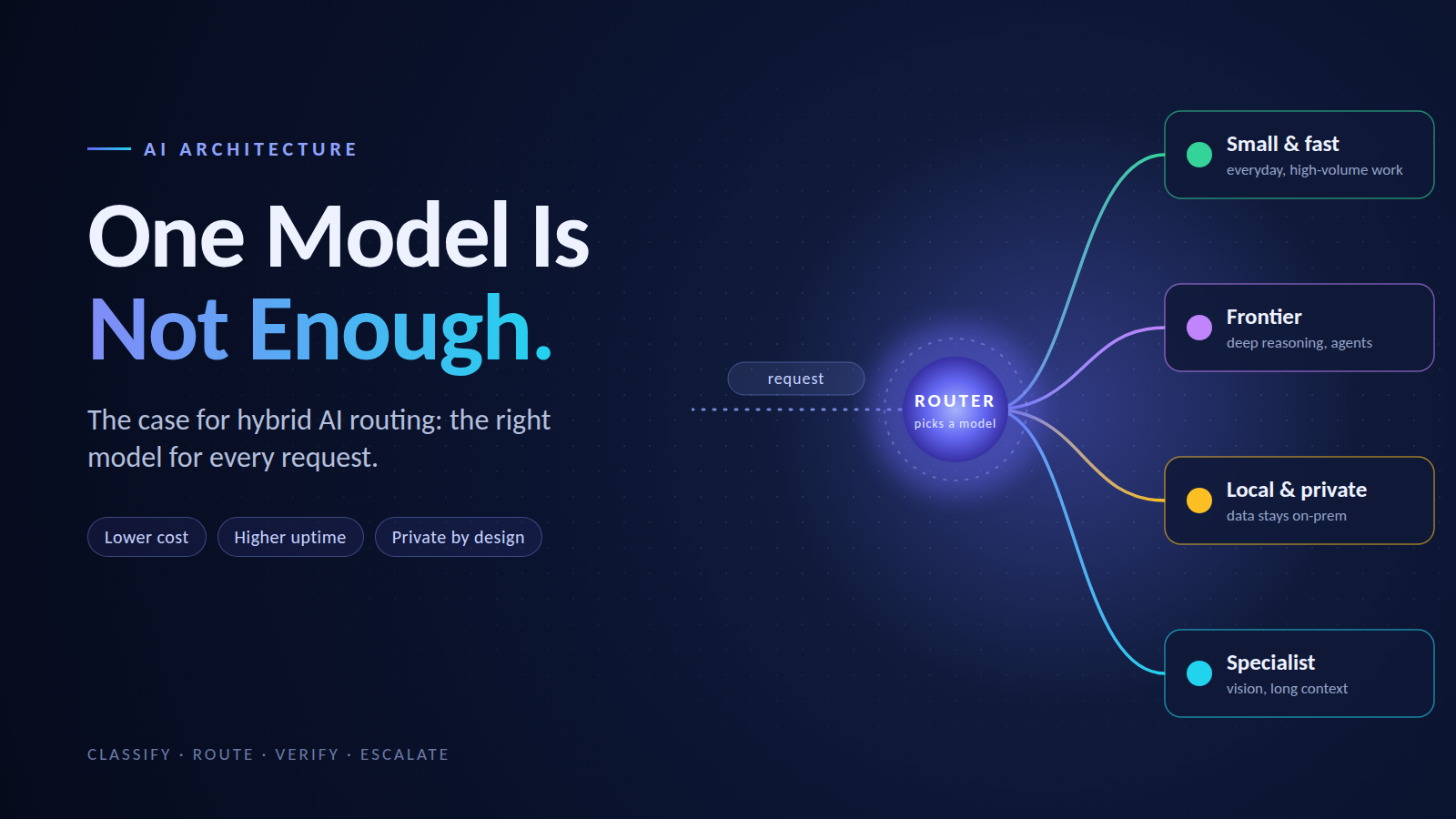
Sending every AI request to a single, expensive model is both wasteful and fragile. A hybrid AI router is a solution that intelligently assigns each task to the most appropriate model. By breaking down the decision-making process into a series of steps, a hybrid router can ensure the right model is used for each unique request.
The key to a hybrid AI router lies in its classification system. The router first determines the type of task, such as summarizing text, extracting information, or performing complex reasoning. Next, it assesses the level of difficulty involved and whether the request contains sensitive data or requires external tools. The router also takes into account the budget and speed constraints of the application.
After the initial assessment, the router consults a model registry, which is a catalog of available models, along with their strengths, limits, and cost. Based on the request's characteristics and the model registry, the router selects the most suitable model or a ranked list of models.
To ensure reliability, the hybrid router incorporates safety nets such as fallbacks and cascades. Fallbacks allow the router to switch to an alternative model in case of infrastructure failures or service disruptions. Cascades, on the other hand, handle cases where the initially selected model produces an incorrect or unsatisfactory answer by escalating to a stronger model for reevaluation.
Written by urgent.news from HackerNoon's reporting — not their text. Machine-written — may contain errors; check the original before relying on it.