Returning samples from a Mars moon: Inside the science of Japan's bold MMX mission
Japan's mission to Mars' moons could answer a decades old question dividing the origins of Phobos and Deimos between two conflicting theories, and make history as the first spacecraft to return to Earth from orbit of the Red Planet.
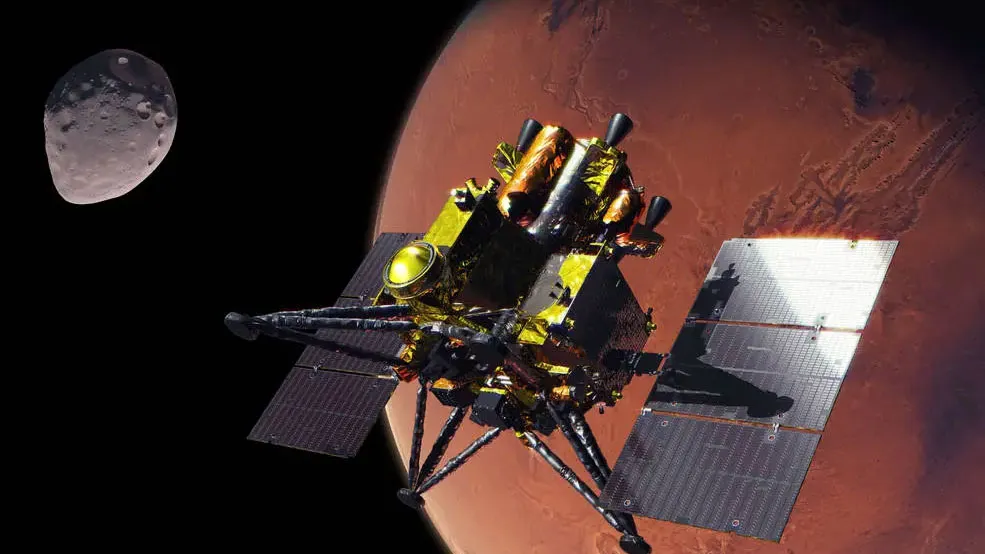
Japan's ambitious Martian Moons eXploration (MMX) mission aims to become the first spacecraft to return samples from Mars orbit, carrying the first-ever Martian moon samples back to Earth. The mission includes a landing on Phobos, the larger of Mars' two moons, to collect surface samples. After a 10-month journey to Mars, MMX will spend about three years studying Phobos, deploying a rover named IDEFIX and collecting samples for analysis. If successful, the sample-return capsule is expected to land in Australia in 2031.
Written by urgent.news from Space.com's reporting — not their text. Machine-written — may contain errors; check the original before relying on it.