'Our job is to be right, not popular,' says Chief Justice
KUALA LUMPUR: The judiciary must earn public confidence through integrity, transparency and accountability rather than chase popularity.
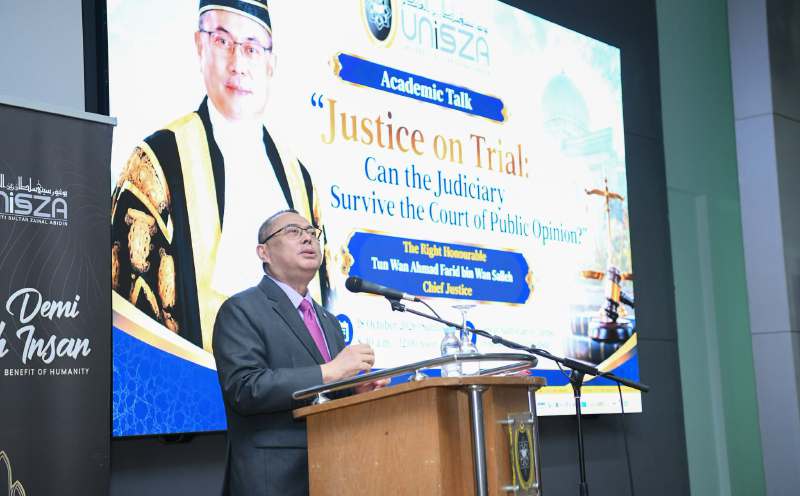
KUALA LUMPUR: The judiciary must prioritize integrity, transparency, and accountability over popularity to gain public trust, Chief Justice Tun Wan Ahmad Farid Wan Salleh declared. Social media has intensified public scrutiny of court decisions, with judgments often condemned or praised without the public having read the legal reasoning.
Judges are not required to be popular but must remain right, Wan Ahmad Farid said during a lecture at Universiti Sultan Zainal Abidin. The distinction between public confidence and public approval is crucial in preserving judicial independence, he emphasized. The judiciary faces challenges such as public suspicion stemming from past controversies, the speed and distortion of information on social media, and the tendency to judge courts based on rulings instead of processes.
Past crises, like the 1988 suspension of judges and the 2007 Lingam video controversy, highlight the importance of self-correction and learning from past mistakes. The judiciary should acknowledge failures, pursue rigorous self-correction, and protect due process. Social media has widened the gap between court decisions and public perceptions, as lengthy judgments can be reduced to screenshots with quick online reactions.
The public should read full judgments, including dissenting opinions, before forming opinions. Judges must remain committed to legality, independence, and integrity despite challenges, as sustained online pressure could compromise judicial independence if judges become hesitant to make unpopular decisions. To strengthen public trust, the judiciary should explain decisions in accessible language, protect due process, defend independence without personalizing disputes, ensure genuine accountability, and uphold credible ethical standards.
Written by urgent.news from New Straits Times's reporting — not their text. Machine-written — may contain errors; check the original before relying on it.